 Now Serving Canada
Data Center Safety Spotlight
Always-On Economy, Always-On Risk: Why Rising Energy Demand Requires Fall Protection
The modern economy no longer sleeps. AI workloads, cloud computing, electrification, and digital infrastructure have created a baseline expectation of uninterrupted power. For energy producers, reliability isn’t just a goal, it’s a mandate.
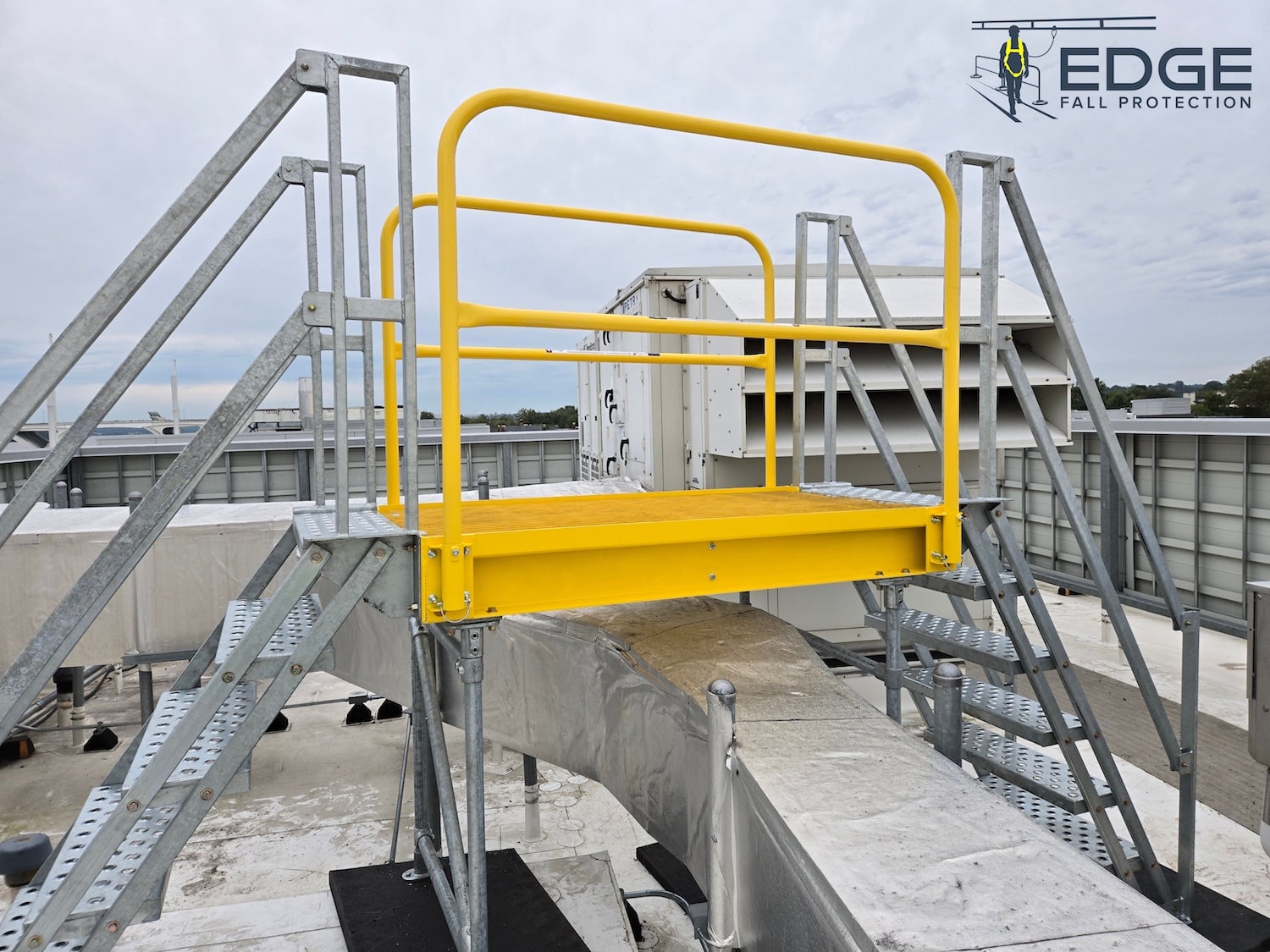
That expectation has reshaped how facilities operate. Maintenance windows are shorter. Expansion projects move faster. Turnarounds are tighter. And more work is happening at height, often under pressure to restore or maintain uptime.
In an always-on economy, risk exposure becomes always on too. And nowhere is that more evident than in elevated work environments across the energy sector.
Key Takeaways
-
The U.S. energy sector has entered an always-on demand cycle driven by AI, data centers, and grid pressure.
-
Meeting 24/7 power expectations requires faster builds, more maintenance, and more elevated work.
-
Compressed timelines and uptime pressure increase fall risk across energy facilities.
-
Falls remain one of OSHA’s leading causes of serious workplace injury, but they are preventable.
-
Data center fall protection must scale alongside energy production to protect workers and maintain reliability.
What’s Driving Energy Demand: AI, Data Centers, and Grid Strain
U.S. electricity demand is accelerating after years of relatively flat growth. The U.S. Energy Information Administration (EIA) now projects sustained increases in electricity consumption through 2026, reversing a long period of stability as industrial and commercial loads rise.
A major driver is the rapid expansion of data centers supporting AI and cloud computing. According to a recent U.S. Department of Energy report, data center electricity use has more than tripled over the past decade and could double again by 2028 as AI workloads scale.
This demand is also highly regionally concentrated, placing disproportionate strain on local grids and generation assets. Research shows clusters of large data centers are reshaping regional load forecasts and accelerating infrastructure stress.
The challenge is timing. Grid upgrades, generation expansion, and transmission projects often take years to plan and build, while electricity demand is increasing much faster, creating a widening gap between demand pace and infrastructure readiness.
The Operational Ripple Effect Across Energy Production
While the demand drivers may differ, the operational impact looks similar across energy industries:
-
Natural gas: Fast-response generation and infrastructure expansion require frequent inspections, equipment access, and elevated maintenance to balance peak load.
-
Oil & gas: Uptime expectations and intensive maintenance schedules increase risk exposure during turnarounds, inspections, and equipment servicing.
-
Renewable fuels and engineered biodiesel: Facility scaling, retrofits, and new builds introduce unfamiliar layouts and elevated access challenges.
-
**Nuclear:**Baseload reliability demands precision maintenance and upgrades, often performed in controlled, elevated environments with little margin for error.
Across all of these settings, elevated work is becoming more frequent and less flexible to postpone. This is why data center safety should be at the forefront of the conversation.
The Hidden Risk Curve: When Speed Creates Safety Risk Exposure
Operational pressure doesn’t just change schedules; it reshapes safety risks.
Compressed timelines often lead to overlapping crews, extended shifts, contractor turnover, and fatigue. Temporary access solutions remain in place longer. Work zones change faster than safety controls.
Falls remain one of the leading causes of serious workplace injury and fatality across U.S. industries. According to the Bureau of Labor Statistics, falls, slips, and trips account for hundreds of fatal injuries each year, consistently ranking among the top causes of worker deaths.
OSHA continues to emphasize fall hazards as a primary enforcement focus, particularly in environments involving rooftops, platforms, ladders, and unprotected edges.
In energy facilities, common fall hazards include roof perimeters, equipment platforms, access hatches, ladders, and maintenance zones not designed for routine access. When demand accelerates, these hazards multiply, unless protection is engineered into the environment. Both permanent safety equipment and worker restraint systems should be in place.
The Data Center Safety Imperative: Protection Must Scale With Demand
Rising energy demand makes one reality unavoidable: safety systems cannot remain static while operations accelerate.
Fall Protection is not just a compliance requirement; it’s an operational control. Engineered guardrail systems, protected access points, and standardized fall protection layouts allow work to continue safely without sacrificing uptime.
EDGE Fall Protection supports energy teams by helping them:
-
Identify elevated work zones that create recurring exposure during maintenance and expansion
-
Engineer OSHA- and ANSI-compliant fall protection solutions
-
Standardize protection across facilities and contractor crews
-
Reduce reliance on temporary or inconsistent safety measures
By designing fall protection into rooftops, platforms, and access areas, organizations reduce uncertainty for workers and leaders alike, even as demand continues to rise.
What Energy & Data Center Leaders Should Do Next to Ensure Safety
The always-on energy era is not temporary. AI adoption, electrification, and grid modernization will continue to drive accelerated demand.
Leaders can respond by aligning safety planning with operational growth:
-
Assess elevated work zones before demand forces rushed decisions
-
Standardize fall protection across sites, not project by project
-
Treat fall protection as infrastructure, not an afterthought
Protecting workers at height supports compliance, reliability, and long-term performance. In an always-on economy, that protection needs to be always on, too.
Talk to an expert about fall protection solutions for energy facilities.
FAQs: Worker Safety in Data Center Facilities
Why is fall protection especially critical in energy production environments?
Energy facilities require frequent maintenance, inspections, and upgrades at height. OSHA identifies falls as a leading cause of serious workplace injury, making engineered fall protection essential.
What OSHA standards apply to fall protection in energy facilities?
Fall protection requirements are addressed under OSHA 29 CFR 1910 and 1926, covering guardrails, access points, and hazard mitigation for elevated work.
How does increased energy demand affect worker safety?
Higher demand compresses timelines and increases the frequency of elevated work. Without standardized protection, exposure and injury risk rise.
Are temporary safety measures enough for ongoing maintenance work?
Temporary measures may address short-term needs, but OSHA and industry best practices favor permanent, engineered solutions for areas with recurring access.
When should energy facilities assess fall protection needs?
Before expansions, retrofits, or major demand increases. Proactive assessments reduce rushed decisions and improve compliance and productivity.
References
- U.S. Energy Information Administration: Today in Energy
- U.S. Department of Energy: DOE Releases New Report Evaluating Increase in Electricity Demand from Data Centers
- Pew Research Center: What We Know About Energy Use at U.S. Data Centers Amid the AI Boom
- Institute for Energy Research: U.S. Peak Load Growth to Increase by 166 Gigawatts Over the Next Five Years
- U.S. Bureau of Labor Statistics: Injuries, Illnesses, and Fatalities Latest Numbers
- OSHA: Fall Prevention Campaign