 Now Serving Canada
Difference between Active vs. Passive Fall Protection
Quick Summary: Active and passive fall protection both help reduce fall risk, but they work in different ways. Passive systems, like guardrails, railings, hatch protection, and safety barriers, stay in place and do not require the worker to take action each time. Active systems, like harnesses, lanyards, anchors, lifelines, and rigid rail systems, require the worker to use the equipment correctly and have a rescue plan in place. For many worksites, the right solution may include both passive and active systems depending on the hazard, access point, and task.
Last Updated: 7/14/2026
OSHA requirements for worker safety can be confusing. This is often due to industry terminology, and the area of fall prevention is no exception.
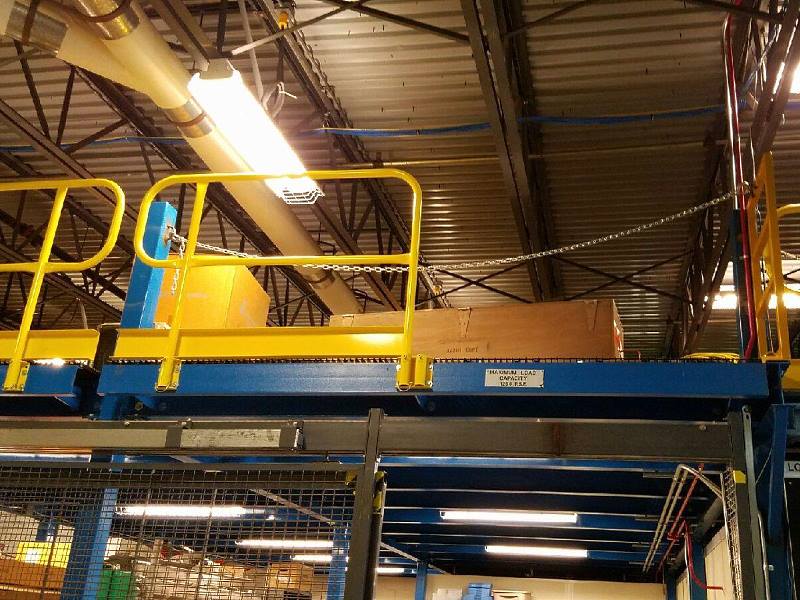
Active vs Passive Fall Protection
There are two different fall protection measures that can be implemented where height safety is a concern.
Both passive fall protection and active fall protection are important in reducing fall risk, but in fundamentally different ways.
Let’s discuss each fall protection solution in detail so you can distinguish the differences, and better understand the related safety equipment you will need for your appllication.
What is Passive Fall Protection?
Passive fall protection reduces the risk of fall hazard due to a protection system that is installed in place.
This equipment can be either permanent or temporary in nature, but the main point is this. A passive fall protection system remains in place for fall prevention, and operates independent of workers taking any action on their part.
Passive protection is a system that is stationary, non-dynamic, and requires no human interaction to support itself or serve its purpose.
In other words, it doesn’t rely upon a worker remembering to put on a safety harness. Instead of a harness, picture a leading edge that features a toe board or safety railings.
Here is a simple breakdown of how active and passive fall protection systems compare in real-world use.
Active vs. Passive Fall Protection Comparison
| Category | Passive Fall Protection | Active Fall Protection |
|---|---|---|
| How it works | Uses a fixed barrier to help prevent workers from reaching a fall hazard. | Uses personal equipment to arrest or limit a fall if one occurs. |
| Worker action required | Minimal. The system protects workers once installed. | High. Workers must inspect, wear, connect, and use the equipment correctly. |
| Common examples | Guardrails, safety railings, hatch protection, skylight screens, safety gates, and barriers. | Harnesses, lanyards, anchors, self-retracting lifelines, horizontal lifelines, vertical lifelines, and rigid rail systems. |
| Training needs | Usually lower because the system does not depend on each worker tying off. | Higher because workers must know how to inspect, connect, use, and maintain the system. |
| Rescue planning | Less complex because the goal is to prevent access to the hazard before a fall happens. | More important because a fallen worker may be suspended after a fall arrest event. |
| Best fit | Repeated access areas, rooftops, platforms, ladders, hatches, skylights, and predictable work zones. | Tasks where guardrails or barriers are not practical, or where workers need mobility near a fall hazard. |
| Main advantage | Reduces reliance on individual behavior and creates a constant protective barrier. | Provides flexible protection for complex work areas where fixed barriers may not work. |
What Equipment Do Passive Fall Protection Systems Include?
Let’s now discuss some specific and common examples of passive fall protection equipment. Here are some applications our team frequently advises our customers on.
A passive system often takes the form of safety railings (often called guardrails) or a flat roof railing. In freestanding situations, a netting system where frequent access or use may occur.
On rooftops, installing a roof hatch near openings is a very common safety application put in place to protect workers.
Temporary roof safety products are important for many customers. These can range in size to meet all OSHA guardrail requirements. They are simple to install, and due to their temporary or “moveable” nature, avoid expensive roof penetrations. This type of equipment is especially helpful and economical when installing fall protection guardrails on metal roofs.
The simplicity of a passive fall protection system make it an appealing and required option in most safety settings. There are solutions for most every worker application, with temporary roof safety railings being the most common OSHA equipment in use.
Since these systems are always in place and require no worker engagement, there are fewer opportunities for user error, thus reducing injury.
Unfortunately, passive fall protection systems are not always feasible or practical in every working environment. For these scenarios, active vs passive fall protection systems will be implemented. Let’s discuss these now.
What is Active Fall Protection?
An active fall protection system is dynamic. It requires the use of personal protective equipment specifically designed to prevent a fall from occurring, or restricting a worker’s ability to place him or herself in a free fall.
With active vs passive fall protection, a worker dons a safety harness connected to an anchor point via a lanyard. A horizontal lifeline is often present as well. A common installation will include a rigid rail fall protection track system.
While individual pieces of an active fall arrest restraint system are regularly sold as separate components, each part is equally important. Together they make up an active system.
Active Protection is Indeed a System
The “chain is only as strong as its weakest link” is an idea that applies to all active fall systems: if one equipment component of the system fails, the whole system fails.
This is why each part of the active fall protection system is required by OSHA to meet certain standards. Thought should also be given to the hierarchy of controls within the system itself.
It should be regularly checked by a competent person to ensure all components of an individual’s protection equipment is functioning in accordance with the manufacturer’s requirements.
What is the Difference Between Fall Restraint and Fall Arrest?
There are two subcategories of an active fall system: The fall restraint system and also fall arrest. Let’s discuss them both.
Fall restraint limits the ability of workers to place themselves in a scenario where they can fall off an elevated work area such as a platform or aerial lift.
This means that the fall restraint lanyard connected to an individual will not allow that person the clearance to pass a threshold where he or she could free fall off a leading edge.
The fall arrest system is designed to stop an individual from hitting the ground in the event of a free fall. The most common component is a body harness.
Full body fall protection harnesses should be worn that evenly distribute the force of the fall throughout the body while it is being arrested. This acts as a distributed energy absorber, and stands to prevent more injury than the last resort of an “abrupt” safety net closer to the ground.
Fall retrieval is another consideration. When a person does fall from an elevated platform, steps must be taken to retrieve the individual.
A retrieval plan must be in place before implementing a fall arrest system. This is to ensure that in the event of a fall, measures can be taken quickly and effectively to remove the person from hazardously being suspended in the air. This is not only practical, but an OSHA requirement.
How to Choose the Right Passive and Active Safety Equipment
We know, it can be daunting to understand what your unique situation calls for to ensure both safety for employees and OSHA compliance for the regulators. This is where we come in to help.
Our team will guide you in the appropriate active or passive fall protection equipment decisions that meet safety standards, but also adhere to budgets.
There are a number of safety systems that can be designed and implemented depending on each working environment. We have you covered in the areas of crossover work platforms and metal stairs, personal fall arrest systems, industrial safety railing products, and more.
We can also help advise you on establishing standard operating guidelines and procedures for your organization.
Got questions? Please reach out to the EDGE Fall Protection team today!
FAQs: Active vs. Passive Fall Protection
What is the difference between active and passive fall protection?
Passive fall protection uses a fixed barrier, such as a guardrail or safety railing, to help prevent a fall without requiring the worker to connect to equipment. Active fall protection requires the worker to use gear such as a harness, lanyard, anchor point, or lifeline.
Is passive fall protection better than active fall protection?
Passive fall protection is often preferred when it can be used because it protects workers without relying on tie-off, training, or individual action each time. However, active fall protection may be necessary when guardrails or barriers are not practical for the work area.
What are examples of passive fall protection?
Common passive fall protection examples include guardrail systems, rooftop railings, hatch protection, skylight screens, safety gates, and fixed barriers around elevated work areas.
What are examples of active fall protection?
Active fall protection examples include harnesses, lanyards, self-retracting lifelines, anchor points, horizontal lifelines, vertical lifelines, and rigid rail systems. These systems require proper use, inspection, training, and rescue planning.
References
- WAHA: Glossary of Height Safety Terms
- National Library of Medicine: Fall Prevention
- Virginia Tech: Fall Protection and Hierarchy of Controls
- CEA: Fall Protection Competent Person Training
- ASCE: Fall Prevention vs. Fall Protection vs. Fall Restraint
- OSHA: Rescue of a Suspended Worker Following a Fall Event
- OSHA: Fall Protection Overview