 Now Serving Canada
Emergency Preparedness and Response Guide for Worker Safety
By OSHA standards, organizations have a legal obligation to provide employees with a workplace free from recognized hazards likely to cause death or serious physical harm.
This means having an emergency preparedness and response plan for severe weather and natural disaster events including hurricanes, tornadoes, extreme heat, lightning, and poor air quality conditions. Many companies undergo training and develop an emergency response program with active management to keep workers safe and ensure OSHA compliance.
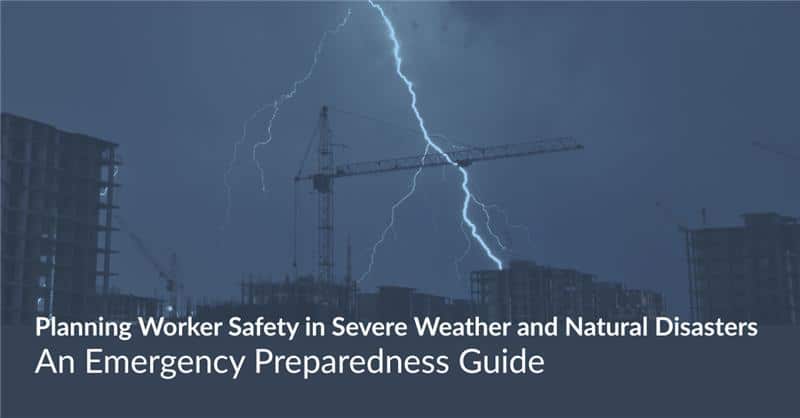
According to OSHA natural disaster preparedness guidelines, you must implement and maintain an emergency preparedness and response plan that addresses the types of natural disasters most likely to impact your jobsites and worker safety in extreme weather conditions. This is not negotiable.
Emergency Preparedness & Response Management
Your location and/or jobsite will dictate the reasonable safety measures that you need to take to ensure worker safety. Once identified, you can construct an emergency disaster safety guide that is relevant to your situation.
Your organization’s official policy should align with an OSHA-approved emergency preparedness plan. To help you understand that standard, we’ve compiled safety tips and category-specific checklists for quick reference based on weather events.
OSHA Severe Weather Guidelines for Worker Safety
Tornado Safety on Construction Sites
Unlike hurricanes or blizzards, tornadoes offer very little lead time—sometimes only minutes. That’s why preparation before a storm hits is critical.
High winds, flying debris, and erratic paths make tornados uniquely dangerous, especially for facilities with large windows, wide open spaces, or outdoor operations in high-risk regions like the Midwest and Southeast.
Tornado Preparedness Checklist
- Identify a Designated Storm Shelter: Choose interior rooms or basement areas away from windows, ideally on the lowest level.
- Post Clear Signage: Mark shelter areas clearly so everyone knows where to go during a warning.
- Monitor Weather Alerts: Use weather radios or alert systems to receive real-time updates.
- Develop an Emergency Action Plan: Include tornado-specific protocols, evacuation routes, and shelter-in-place procedures.
- Conduct Regular Drills: Practice response plans at least once a year to prepare all employees on what to do.
- Assign Roles: Designate safety coordinators to lead employees to shelter areas.
- Keep Emergency Supplies Ready: Stock shelters with water, flashlights, first-aid kits, and communication devices.
- Review After Each Event: Evaluate what went well and where improvements are needed. \
Learn more in our full guide to Tornado Safety in the Workplace for additional OSHA tornado preparedness.
Hurricane Safety on Construction Sites
Unlike tornadoes, hurricanes are usually tracked for days before landfall, giving you more time to prepare. However, a wide impact zone, long duration, and potential for flooding make hurricanes especially disruptive.
Damage often continues after the storm due to infrastructure failure, downed power lines, or contaminated floodwaters, so post-storm safety is just as important as pre-storm planning.
Hurricane Worker Safety Checklist
- Monitor Forecasts Closely: Stay alert through weather updates and local emergency alerts.
- Establish a Communication Plan: Make sure all employees receive timely information before and after the storm.
- Review and Share the Emergency Action Plan: Include evacuation routes, shelter-in-place procedures, and post-storm protocols.
- Secure the Facility: Anchor outdoor equipment, board up windows, and protect essential machinery or data systems.
- Designate Roles and Responsibilities: Assign staff to lead safety efforts, assist with shutdown procedures, and account for team members.
- Maintain an Emergency Supply Kit: Include water, food, first-aid supplies, flashlights, batteries, radios, and chargers.
- Plan for Business Continuity: Identify how and when critical operations will resume.
- Conduct Pre-Storm Training: Review safety measures and establish roles before hurricane season starts. \
See our complete Hurricane Preparedness Plan for Worker Safety to strengthen your OSHA hurricane safety program.
Heat-Related Illness Prevention Guidelines
Heat stress can come on gradually or suddenly, especially during high humidity or after prolonged exposure. OSHA’s Heat Illness Prevention Campaign emphasizes hydration, rest, and shade, but recognizing the symptoms of illness is critical for protecting your workers.
Heat-Related Illness Prevention Checklist
During periods of extreme heat:
- Enforce Work/Rest Cycles: Implement schedules that allow for frequent breaks in cool environments. This is a core heat safety tip for outdoor workers.
- Monitor Workers for Signs of Heat Illness: Watch for signs of heat exhaustion on the job like dizziness, nausea, excessive sweating, or confusion.
- Respond Promptly to Emergencies: If a worker shows signs of heat-related illness, move them to a cooler area, provide hydration, and seek medical attention immediately.
- Adjust Work Schedules: Whenever possible, schedule heavy labor during cooler parts of the day to promote heat safety.
Once extreme heat conditions subside:
- Conduct Post-Event Evaluations: Review the effectiveness of your heat illness prevention plan and make necessary adjustments.
- Inspect Equipment and Facilities: Ensure that cooling systems and other equipment are functioning properly.
- Debrief with Employees: Gather feedback from workers on heat mitigation measures and any incidents that occurred.
- Update Training and Protocols: Incorporate lessons learned into future training sessions and emergency response plans.
If heat stroke is suspected, call 911 immediately. This condition can be fatal without prompt medical attention.
Explore our detailed resource on Heat Illness Prevention for Outdoor Workers for help complying with OSHA severe weather guidelines.
Lightning Safety Precautions for Workers
Lightning is a serious safety hazard on construction sites, especially for crews working at heights or near cranes and scaffolding. When storms approach, OSHA lightning standards make it clear that employers have a duty to protect workers from lightning-related risks. Unlike rain or wind, lightning strikes can occur without warning—even up to 10 miles outside of rainfall—making proactive safety measures critical.
Lightning Preparedness Checklist
- Monitor Weather Continuously: Use weather radios, mobile apps, or lightning detection services to track storm activity in real time.
- Provide Safe Shelter: Direct workers to fully enclosed buildings with plumbing and wiring, or hard-topped vehicles with rolled-up windows. Workers should remain sheltered at least 30 minutes after the last thunder.
- Suspend High-Risk Operations: Stop work on scaffolds, rooftops, cranes, and demolition activities when storms approach. OSHA requires crane and scaffold operations to pause during electrical storms.
- Avoid Conductive Surfaces: Keep workers away from metal equipment, piping, and tools during storm activity.
- Train All Employees: Ensure every crew member understands lightning hazards, evacuation routes, and safe shelter protocols as part of your lightning safety plan.
- Create a Site-Specific Lightning Safety Plan: Define when to suspend work, how to communicate alerts, designated shelter areas, evacuation timelines, and supervisor responsibilities.
Recognizing storm hazards early—such as darkening skies, thunder, or distant lightning—is vital to preventing worker exposure. Remember OSHA’s distance standard: “When thunder roars, go indoors.”
See our complete OSHA Lightning Standards: Keeping Workers Safe During Storms for a deeper dive into lightning safety requirements.
Air Quality Safety Checklist for Construction Workers
Air quality isn’t always top of mind in workplace safety conversations, but recent events have changed that. Wildfire smoke—especially from large-scale fires in Canada and the Western U.S.—can drift into major metro areas across the Midwest and East Coast, triggering air quality alerts and posing new health risks for outdoor workers.
These environmental conditions can escalate quickly and often without much notice. That’s why understanding how to respond to air quality index (AQI) alerts is critical to keeping your team safe on the job.
Workplace Checklist for Poor Air Quality
When the AQI climbs into unsafe levels (usually above 100 for sensitive groups or 150 for all individuals), consider these safety actions:
- Monitor Local AQI Reports: Use resources like AirNow.gov or EPA apps to track real-time air conditions.
- Provide N95 Masks or Respirators: Masks help filter out fine particulate matter from wildfire smoke.
- Limit Strenuous Outdoor Work: Reschedule or reduce high-exertion tasks to lower the risk of respiratory stress.
- Allow for More Frequent Breaks: Especially indoors or in filtered air environments.
- Adjust Schedules: Consider starting earlier in the day when air quality may be better.
- Pause Work if Necessary: If air quality reaches hazardous levels, it may be safer to delay non-essential tasks. \
Check out our Air Quality PSA for more OSHA-backed best practices on that protect worker safety in extreme weather and environmental hazards.
Emergency Preparedness FAQs
What are the OSHA guidelines for disaster preparedness?
OSHA requires employers to identify potential emergency scenarios and develop a written disaster preparedness plan tailored to those risks.
What are the OSHA rules for severe weather?
While OSHA does not have specific standards for every type of weather event, employers must comply with the General Duty Clause and relevant standards such as PPE, hazard communication, and emergency response, which are the foundation of OSHA severe weather guidelines.
What is an emergency preparedness plan?
An emergency or disaster preparedness plan outlines the procedures for protecting employees during unexpected events including evacuation, shelter, communication, and training protocols.
How do you prepare workers for extreme weather?
Through hazard identification, planning, training, and implementing controls such as shelters, hydration, and scheduling changes, employers can place worker safety at the center of their extreme weather response.
Emergency Preparedness & Response for Worker Safety Starts with Planning
Natural disasters and extreme weather events are unpredictable, but worker injuries and risk of fatalities don’t have to be. With proactive emergency response planning, aligned with OSHA severe weather guidelines, you can safeguard your team and keep operations resilient.
Following OSHA severe weather guidelines and having a disaster preparedness plan in place protects your business, workers and operations during emergencies. It’s vital for key personnel to undergo emergency response training and implement a program.
Do you have questions about your emergency response management policy and how to meet OSHA safety requirements? Reach out to the EDGE team today.