 Now Serving Canada
Guardrails 101: How to Choose the Right Products for Your Jobsite
When it comes to fall protection on an elevated jobsite, guardrails are some of the most fundamental and effective solutions. They’re your first line of defense, helping prevent falls and creating a visible boundary between workers and hazardous areas. But not all guardrails are created equally. Choosing the right system requires a clear understanding of your site’s needs, regulatory requirements, and long-term goals.
Whether you’re overseeing a construction site, industrial facility, or rooftop workspace, this guide will help you navigate the essentials of selecting the right guardrails.
Why Do I Need Guardrails?
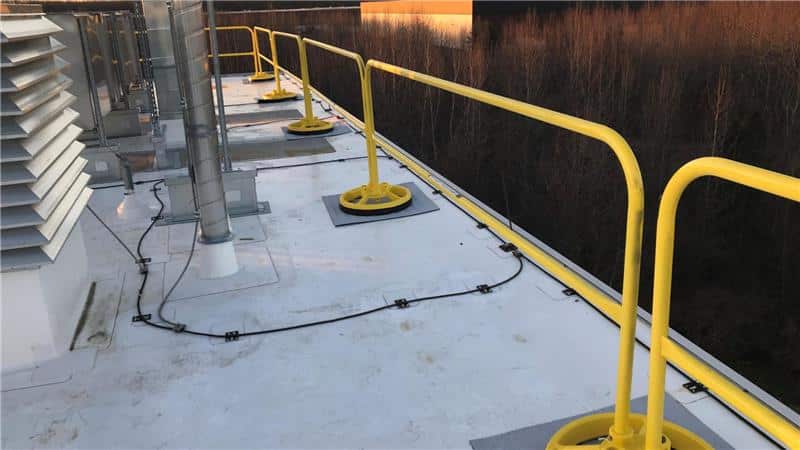
Guardrails serve as passive fall protection, meaning they don’t require any active involvement from a worker, like harnessing in. This makes them the ideal solution for many worksites, especially where multiple workers are present or frequent access is required.
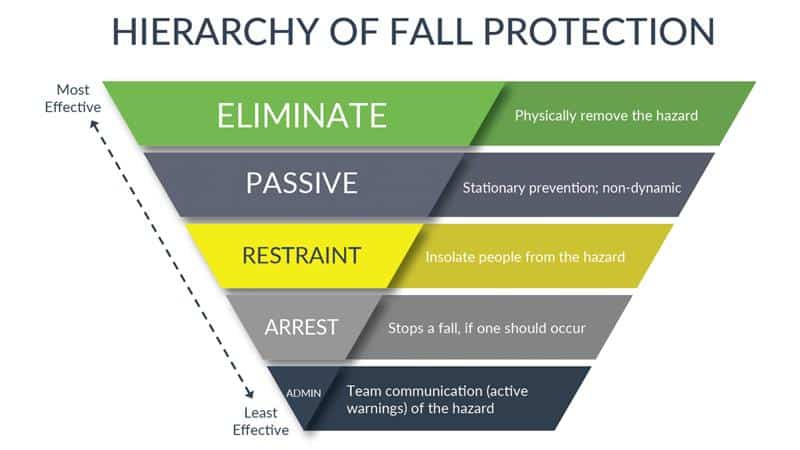
Remember to consider the Hierarchy of Fall Protection. This model ranks control methods by effectiveness, starting with eliminating the hazard entirely (most effective) and ending with administrative controls (least effective).
Passive systems like guardrails sit near the top of the hierarchy because they provide consistent, stationary protection without requiring specialized training.
Choosing Your Guardrail Products
Before you make a decision, consider the following:
1. Work Environment
Start by evaluating the physical environment of your worksite:
- Is the surface flat or sloped?
- Is the system for temporary or permanent use?
- Will it be exposed to harsh weather or corrosive materials?
For example, a freestanding guardrail system might be best suited for a flat rooftop with no penetration allowed, while a permanent solution could be more appropriate for installation at a manufacturing plant.
2. Regulatory Compliance
Always choose a system that meets OSHA and ANSI standards. In most situations, OSHA requires that:
- The top rail is 42 inches (+/-3 inches) above the walking/working surface.
- The system can withstand 200 pounds of force applied in a downward or outward direction.
Working with a provider that understands these standards and designs with regulation compliance in mind can help you avoid costly citations.
State and local regulations also vary across the country, especially in regions with unique environmental factors like high wind, heavy snow, or seismic activity. In these areas, local agencies may require a Professional Engineer (PE) stamp. These additional engineering reviews help you meet safety standards specific to a region or jobsite. This article covers product options in depth with engineering specs.
3. Installation and Portability
Some jobsites demand flexibility, especially in construction. If your project involves shifting work zones or frequent site changes, consider temporary guardrails that can be installed and reconfigured with minimal tools.
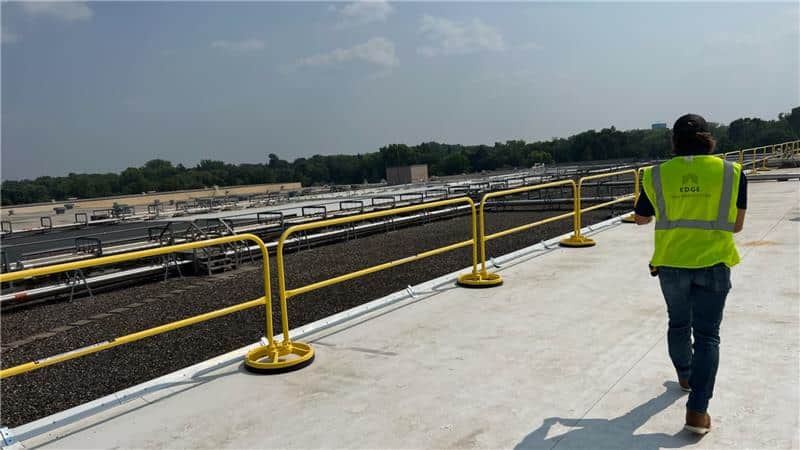
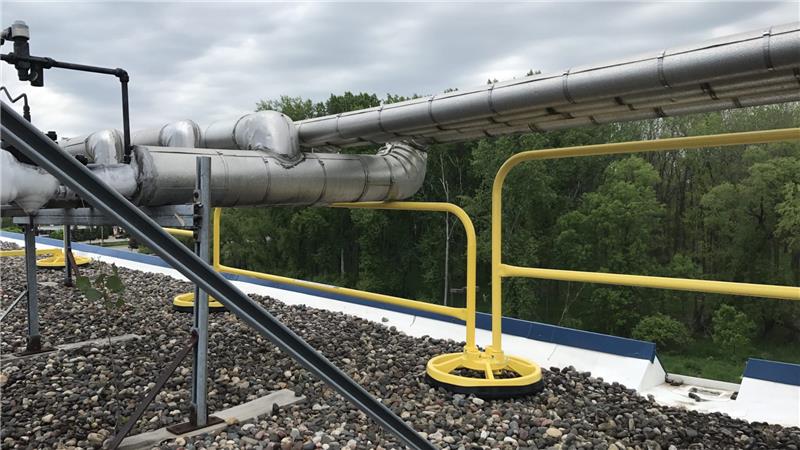
Non-penetrating systems are especially popular for rooftops where preserving the integrity of the surface is a concern. Look for weighted base designs that provide stability without compromising the rooftop or requiring costly engineering reviews.
4. Durability and Maintenance
Guardrails should be built to last, even under tough conditions. Look for systems made of galvanized or powder-coated steel that resist corrosion and wear.
It’s also smart to partner with a provider that offers warranties and ongoing customer support to maximize your investment and protection for years to come.
5. Aesthetics and Operations
In some settings, appearance matters. Facilities with public access or customer visibility might benefit from sleek, low-profile guardrail options that don’t compromise on safety. In warehouses or manufacturing facilities, guardrails might need to integrate with traffic flow and avoid interfering with day-to-day operations.
Effective solutions come from safety collaboration — designers, architects, engineers, and fall protection experts each bring a unique perspective to system installation. When they align early in the planning process, the result is a more cohesive and compliant safety strategy that supports both form and function.
Choosing a Trusted Partner
With so many options on the market, it can be challenging to identify the right guardrail system on your own. Working with an experienced provider who understands your industry, environment, and compliance needs simplifies the process.
At EDGE, we specialize in providing tailored, turnkey safety solutions that align with both regulatory standards and real-world worksite demands. Our systems are designed to be OSHA-compliant, durable, permanent or removable, and easy to install.
💡 Not sure if guardrails are the right fit for your situation? Check out our selection guide to explore your best options.