 Now Serving Canada
Manufacturing Facility Fall Protection
Fall Protection in Industrial Facilities, From the Roof to the Plant Floor
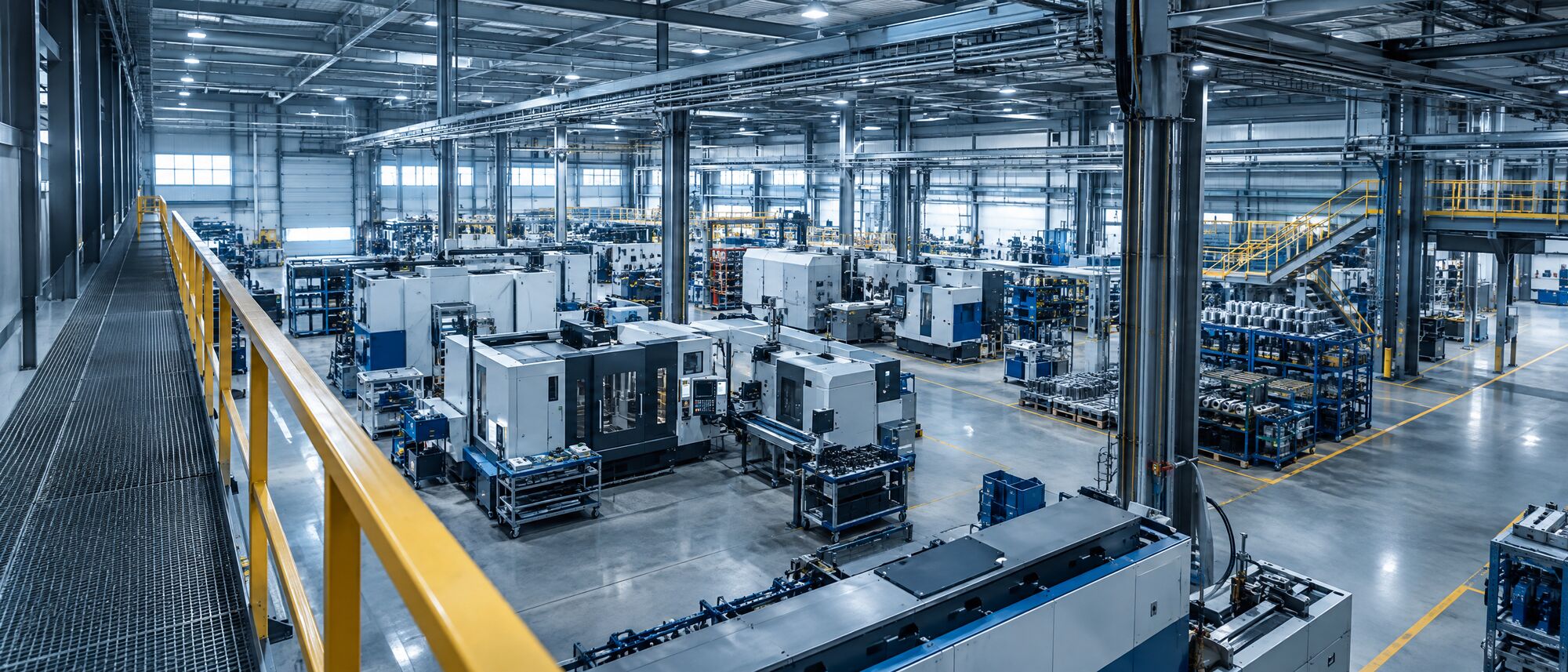
A manufacturing plant puts people at height all day: maintenance techs on mezzanines, operators on platforms beside equipment, crews crossing conveyors and contractors servicing the roof. Under OSHA’s general industry rules, work 4 feet or more above a lower level needs fall protection, and workers above dangerous equipment such as vats, tanks and conveyors need protection at any height.
EDGE Fall Protection walks your plant, engineers a system around how work actually happens there and installs it with our own crews. That means rooftop guardrail, mezzanine guardrail and safety gates, crossover stairs, ladder safety systems and overhead rigid rail that fit your layout, from one partner that also handles annual inspections.
Industrial Fall Risks in Manufacturing Plants
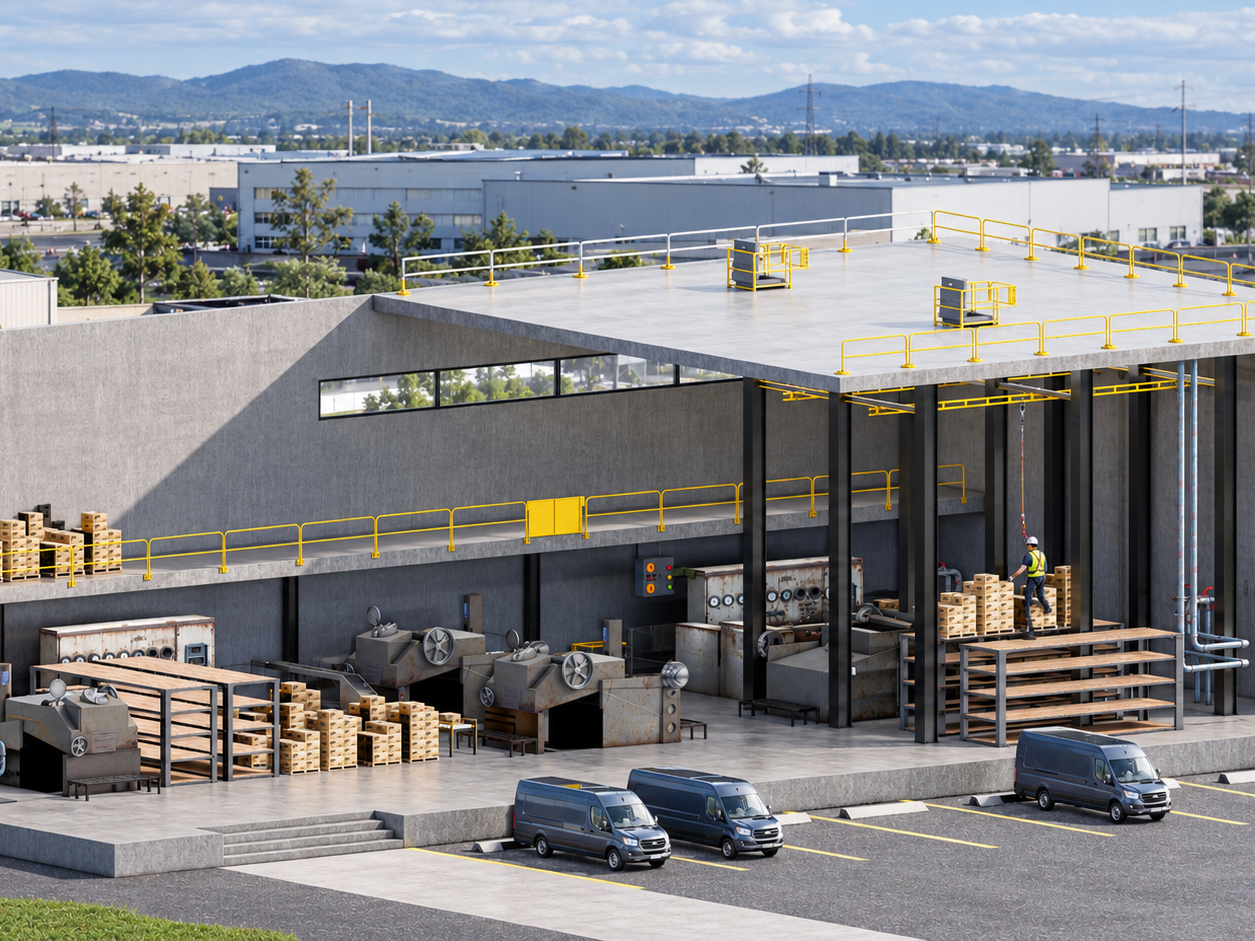
Most industrial fall hazards come from the same handful of places. These are the ones we are asked to solve most often.
Mezzanines and Pick Modules
Mezzanine edges and pallet drop zones stay open far too often. Mezzanine guardrail and safety gates keep the edge guarded while pallets move in and out.
Equipment, Pits and Vats
Workers above vats, tanks and conveyors need protection at any height. Removable pit railing guards the edge and lifts out when equipment has to pass.
Conveyor and Pipe Crossings
Climbing over a conveyor to save a walk is a daily hazard. A conveyor crossover or crossover stairs give crews a guarded route over the line.
Rooftops, HVAC and Skylights
Plant roofs carry exhaust fans, air handlers and skylights near the edge. Non-penetrating guardrail protects the edge without drilling into the roof.
Ladders and Roof Access
Every fixed ladder and roof hatch is a place to fall. Ladder fall arrest systems protect the climb, and self-closing gates guard the landing.
Overhead Maintenance Work
On top of a press, tank or machine, guardrail is often not practical. Ceiling-mounted rigid rail gives the worker an anchor that moves with them.
Mezzanine Guardrail, Gates and Plant Fall Protection Products
These are the systems we install most often in manufacturing plants and industrial facilities. Not sure which fits? Our team will recommend the right mix after a site visit.

360° Mobile Safety Rail
Our most versatile freestanding guardrail — weighted bases, no penetrations, and fully relocatable as your rooftop changes.

AccuFit Safety Railing
Architectural-grade guardrail for buildings where the roofline is visible and appearance matters as much as compliance.

Enduraline Warning Lines
A compliant warning line boundary for low-slope roofs where guardrail is more than the exposure requires.

Davit Arm System
A rotating boom providing an overhead anchor beyond an edge or opening, for suspended access and confined space rescue.

Roof Crossover Ladders
Steps up, a level landing, and steps down — safe passage over a parapet, duct run, or elevation change.

Industrial Crossover
A rated route over the pipe run or conveyor your people are currently climbing across.

Ladder Fall Arrest System
A cable or rail with a locking sleeve that satisfies the fixed ladder requirement a cage no longer meets.

Industrial Removable Safety Railing
Rail sections that lift out by hand for equipment access and reset in minutes, rated the same as fixed rail when in place.

Horizontal Mezzanine Safety Gate
A pivoting dual-gate system that always leaves one side of the mezzanine opening protected — with no overhead clearance required.

Pallet Flow Safety Gate
Protection for elevated pallet drop zones on racking, guarded between deliveries and open only when the lift truck is there.

EDGE E3 Industrial Safety Gate
Our flagship self-closing gate — adjustable across a range of widths and rated to the same load case as guardrail.

Industrial Platform
A stable, guarded work surface for tank tops, hoppers, mixers, and machinery access.

Metal Stairs
Industrial stairways engineered to OSHA 1910.25 geometry, built to your rise and configuration.

Ceiling Mounted Rigid Rail
Continuous overhead protection suspended from the building structure, with zero floor footprint.

Loading Dock Gate
Barrier protection for an open dock door, so the four-foot drop is guarded whenever a trailer is not in the bay.
Nationwide OSHA Compliant Fall Protection
Why Manufacturers Choose EDGE for Industrial Fall Safety
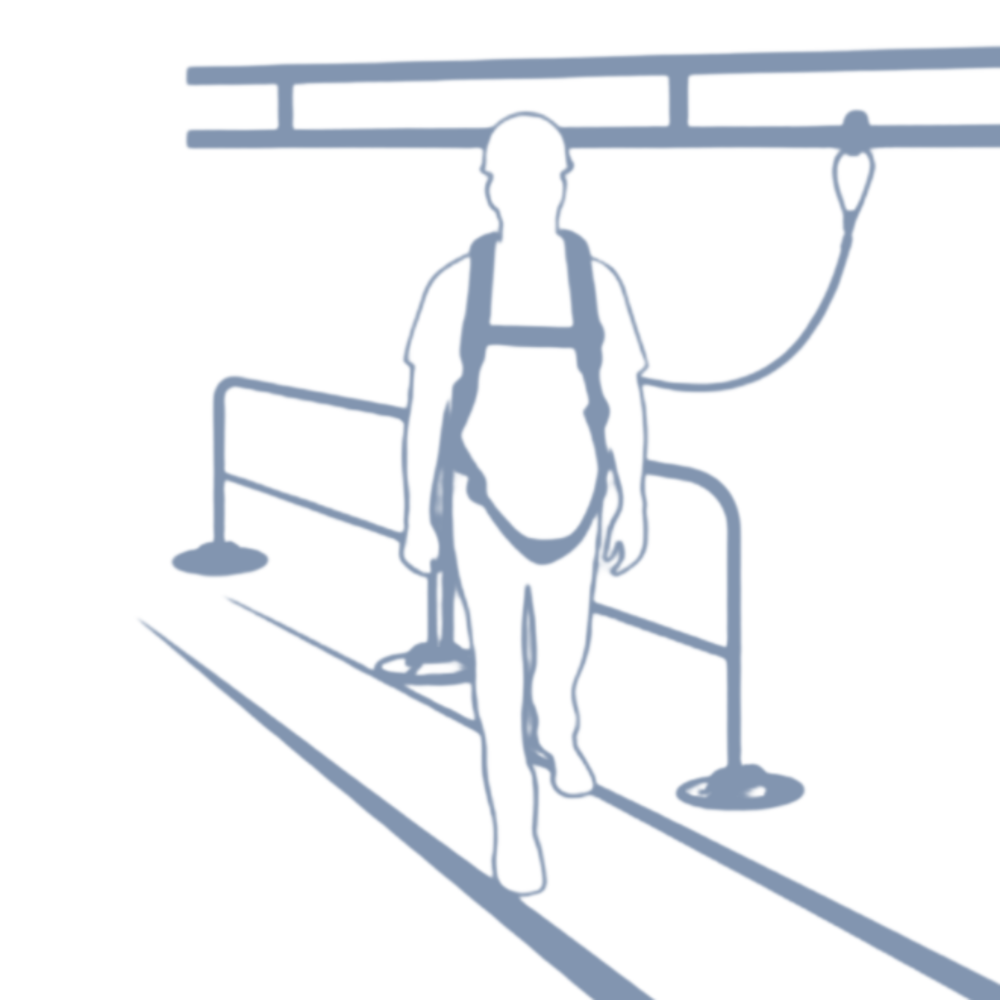
Plant managers and EHS teams do not have time to coordinate a supplier, an engineer and an installer for every hazard on the floor. We handle all three.
- Built around your layout: engineered to the equipment, aisles and access patterns you already have
- Engineered and stamped: EDGE calculates the loads, and a licensed professional engineer stamps the drawings after your approval
- Finishes for plant conditions: powder coated or galvanized options for corrosive, washdown or outdoor areas
- Our own installation crews, working around shift changes, shutdowns or one line at a time
- Multi-plant programs: one standard and one partner across every facility you manage, in all 50 states and Canada
- Ongoing support: annual inspections and five-year anchorage pull tests from our in-house team
Our Happy Clients
We are grateful for the wonderful testimonials from our happy and beloved clients. From local businesses owners to Fortune 500 executives. You all have helped make us a force in the workplace fall protection industry!
Manufacturing Fall Protection FAQ
Plant managers and EHS professionals tend to ask these questions before a project starts. Here are straight answers.
Day-to-day plant operations fall under OSHA’s general industry rules in 29 CFR 1910 Subpart D. They require fall protection on walking-working surfaces 4 feet or more above a lower level (29 CFR 1910.28(b)(1)(i)), protection at any height above dangerous equipment (1910.28(b)(6)), and set the criteria for guardrail, gates, ladders and stairs. Construction work inside the plant, such as an expansion or a roof replacement, follows 29 CFR 1926 instead. EDGE Fall Protection designs each area to the rule that applies.
A chain or bar only protects the opening when someone remembers to put it back. A self-closing gate swings shut on its own after each pass, so a ladderway or platform opening is not left open by mistake. At pallet drop zones, a pallet flow or mezzanine safety gate guards the opening as loads move through. EDGE Fall Protection chooses the gate type around how material moves at that opening.
Only in limited cases. Under OSHA’s general industry rules, work less than 6 feet from a low-slope roof edge needs guardrail, a safety net, travel restraint or personal fall arrest (29 CFR 1910.28(b)(13)). A warning line may mark a work area 6 to 15 feet from the edge only for work that is both infrequent and temporary, and at least 15 feet from the edge for other work. EDGE Fall Protection uses warning lines for work zones set back from the edge and guardrail where equipment is closer.
Workers should check their equipment before each use, and EDGE Fall Protection recommends a documented inspection of the full system by a competent person at least once a year. EDGE also pull tests anchorages every five years. Our in-house inspection team handles both and gives you a report for your safety records.