 Now Serving Canada
MSHA Fall Protection for Mining and Aggregates
Quarry and Aggregate Plant Access, Built for Harsh Sites
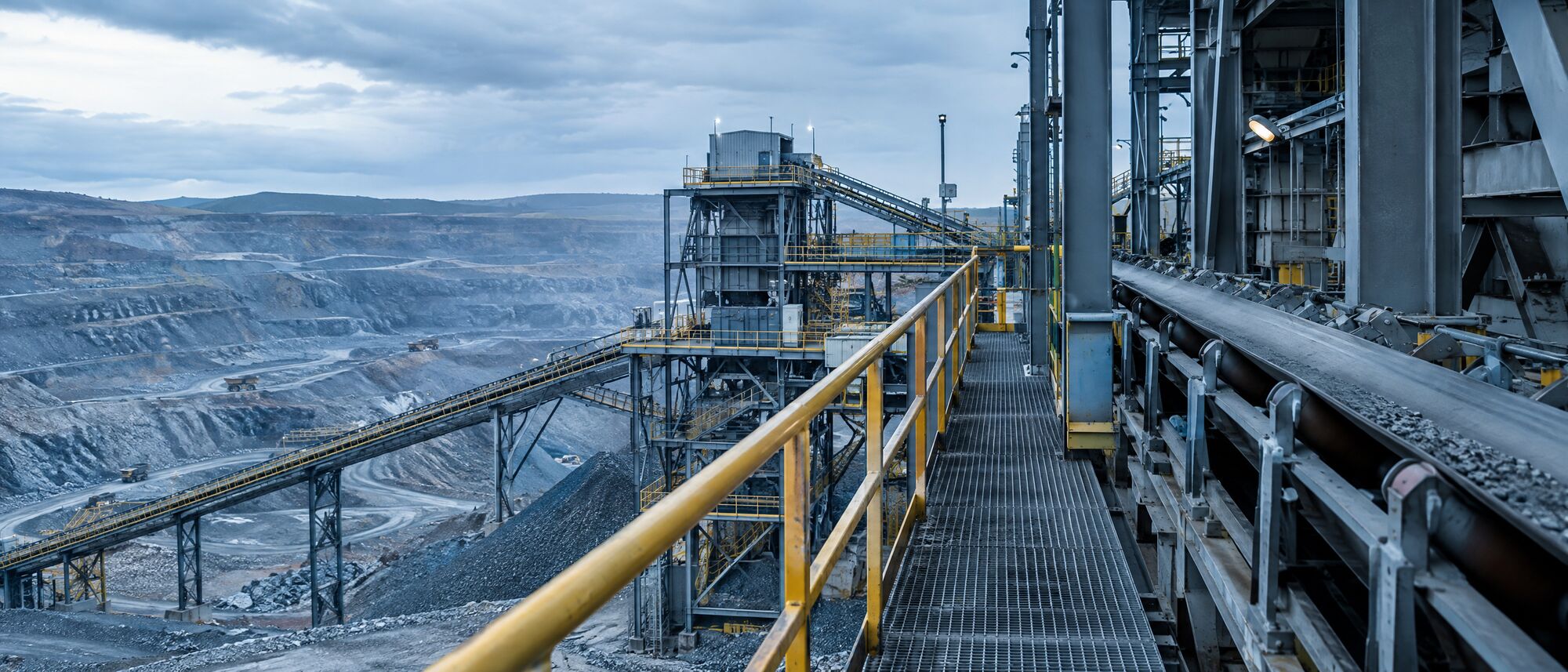
Mines, quarries and sand and gravel operations put workers at height around equipment that vibrates constantly: conveyor walkways, crusher and screen decks, hoppers, surge bins, kilns and truck loadouts. Much of it sits outdoors in dust, mud and weather, and plants get moved, expanded and rebuilt. At most sites, MSHA’s rules in 30 CFR Part 56 require a safe means of access to every working place.
EDGE Fall Protection designs conveyor crossovers, stairs and stair towers, crusher and screen platforms, guardrail and overhead fall arrest with galvanized, heavy-duty components for harsh sites. We install with our own crews at sites across the country and inspect every system each year.
Where Falls Happen at Mines and Aggregate Plants
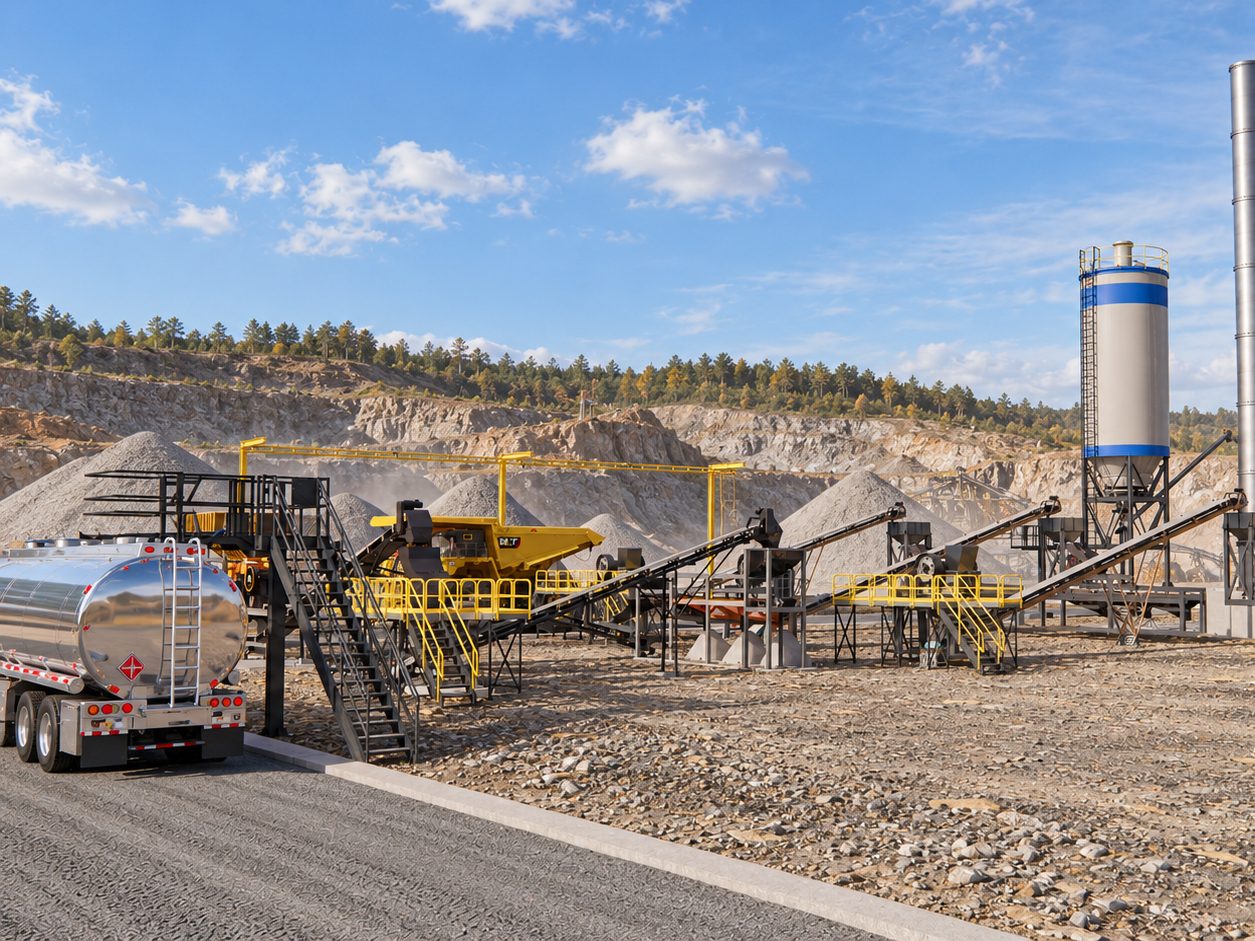
Processing plants pack elevated walkways, open hoppers and moving equipment into one footprint. These are the hazards operators ask us to solve most often.
Conveyor Walkways and Crossings
Long conveyor runs need guarded walkways and safe ways across. A conveyor crossover keeps crews from climbing over the belt.
Crusher and Screen Decks
Crusher and screen decks need daily inspection and frequent liner changes. Work platforms with guardrail give crews solid footing.
Hoppers, Bins and Chutes
Feed hoppers and surge bins leave crews working beside open edges. Custom guardrail is built to the shape of the equipment.
Stairs and Plant Levels
Steep ladders between plant levels are hard to climb safely with tools. Metal stairs and stair towers replace the climb, and ladder fall arrest protects the ladders that stay.
Kilns and Overhead Work
Work on kilns, preheaters and large equipment often has no place to stand behind a rail. An overhead rigid track gives the worker an anchor that moves with them.
Truck Loadouts
Tarping and inspecting loads puts drivers on top of their trailers. A freestanding inverted L or T-frame keeps them tied off at the loadout.
Conveyor Crossover, Walkway, Stair and Platform Systems
These are the systems we install most often at mines, quarries and aggregate plants. Send us your plant layout or photos of the problem areas, and we’ll recommend the right package.

Industrial Crossover
A rated route over the pipe run or conveyor your people are currently climbing across.

Metal Stairs
Industrial stairways engineered to OSHA 1910.25 geometry, built to your rise and configuration.

Industrial Platform
A stable, guarded work surface for tank tops, hoppers, mixers, and machinery access.

Customized Guardrail Solutions
Guardrail engineered for the conditions you actually have when no catalog configuration will fit.

Industrial Removable Safety Railing
Rail sections that lift out by hand for equipment access and reset in minutes, rated the same as fixed rail when in place.

AccuFit Modular Railing System
A pipe-and-fitting system that handles corners, curves, and elevation changes without custom fabrication.

Ladder Fall Arrest System
A cable or rail with a locking sleeve that satisfies the fixed ladder requirement a cage no longer meets.

Fixed Roof Access Ladder
Roof access ladders built to the rule as it reads today, including the ladder safety system requirement over 24 feet.

Self-Closing Ladder Safety Gate
A spring-loaded gate at the top of a fixed ladder that closes behind the climber automatically.

Ceiling Mounted Rigid Rail
Continuous overhead protection suspended from the building structure, with zero floor footprint.

Freestanding Cantilever Rigid Rail
Continuous overhead protection along a full work line, on a counterweighted base with no building attachment.

Free Standing Swing Arm
A rotating overhead anchor on a freestanding base — coverage across a work area with no building modification.

Horizontal Lifeline System
Continuous tie-off across long spans, engineered to your structure, span, and simultaneous user count.

Portable & Mobile Fall Arrest System
A rated overhead anchor on wheels — rolls to the work, sets up in minutes, no installation required.
Nationwide OSHA Compliant Fall Protection
Why Mines and Aggregate Producers Choose EDGE
Plant managers and safety leads need access systems that stand up to vibration, dust and weather, from a partner that knows MSHA sites.
- Designed around MSHA’s access and handrail rules in 30 CFR Part 56, and OSHA’s rules where they apply instead
- Proven at a kiln: EDGE installed an overhead fall protection system at a kiln in a mineral processing plant in the Southeast in March 2026, the second of four systems planned there
- Galvanized, heavy-duty components chosen for dust, vibration and weather
- Options that move with the plant: modular and removable railing, freestanding and mobile fall arrest
- Our own installation crews, who complete each site’s required hazard training before work starts, in all 50 states and Canada
- Ongoing support: annual inspections and five-year anchorage pull tests from our in-house team
Our Happy Clients
We are grateful for the wonderful testimonials from our happy and beloved clients. From local businesses owners to Fortune 500 executives. You all have helped make us a force in the workplace fall protection industry!
MSHA Fall Protection FAQ
Plant managers, superintendents and safety leads ask these questions first. Here are straight answers.
Usually MSHA. The Mine Safety and Health Administration covers mines and the milling of minerals, including surface sand, gravel and crushed stone operations, under 30 CFR Part 56. Under the MSHA-OSHA interagency agreement, some related operations, such as concrete and asphalt batch plants, brick and clay products and smelters, fall under OSHA instead. EDGE Fall Protection designs to whichever agency covers your site. This is general information, not legal advice.
MSHA requires a safe means of access to every working place (30 CFR 56.11001). Crossovers, elevated walkways, elevated ramps and stairways must be of substantial construction, have handrails and be maintained in good condition, with toeboards where necessary (56.11002). Openings above, below or near travelways must be protected (56.11012), and safety belts and lines are required where there is a danger of falling (56.15005).
Yes, when it is specified for it. EDGE Fall Protection selects galvanized steel and heavy-duty components for plant conditions and lays out guardrail to stay out of the path of spillage and loader traffic. Every system should still be inspected at least once a year, and EDGE pull tests anchorages every five years.
Yes. Modular railing, removable railing and freestanding or mobile fall arrest can move with a portable plant, and EDGE Fall Protection’s own installation crews travel to remote sites in all 50 states and Canada.