 Now Serving Canada
Railcar Fall Protection for Rail Yards
Railcar Fall Protection Systems Built Around Your Track
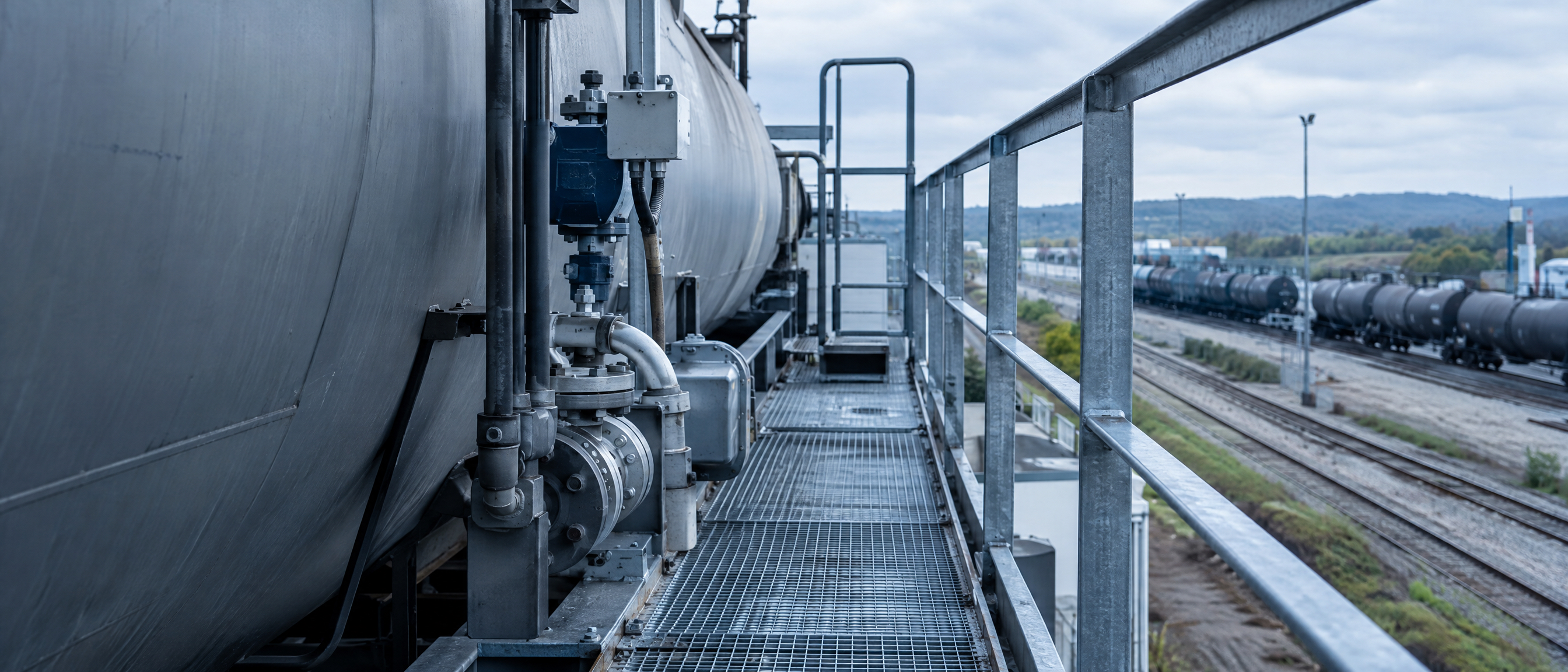
The top of a railcar sits about 15 feet above the ground, and the people who open hatches, load, sample and inspect up there usually have nothing nearby to tie off to. Tank cars, covered hoppers and gondolas put hatches in different places, cars stop at slightly different spots, and most loading track is outdoors. Guardrail and nets rarely work on a railcar, so the anchor has to come from overhead.
EDGE Fall Protection designs freestanding inverted L and T-frame overhead systems, railcar loading platforms, gangways and horizontal lifelines around your track, your car types and the way your crews load. We engineer the foundations, install with our own crews and inspect every system each year.
Where Falls Happen in the Rail Yard
Rail yard safety comes down to a handful of places. These are the railroad fall protection problems we are asked to solve most often.
Top of the Car
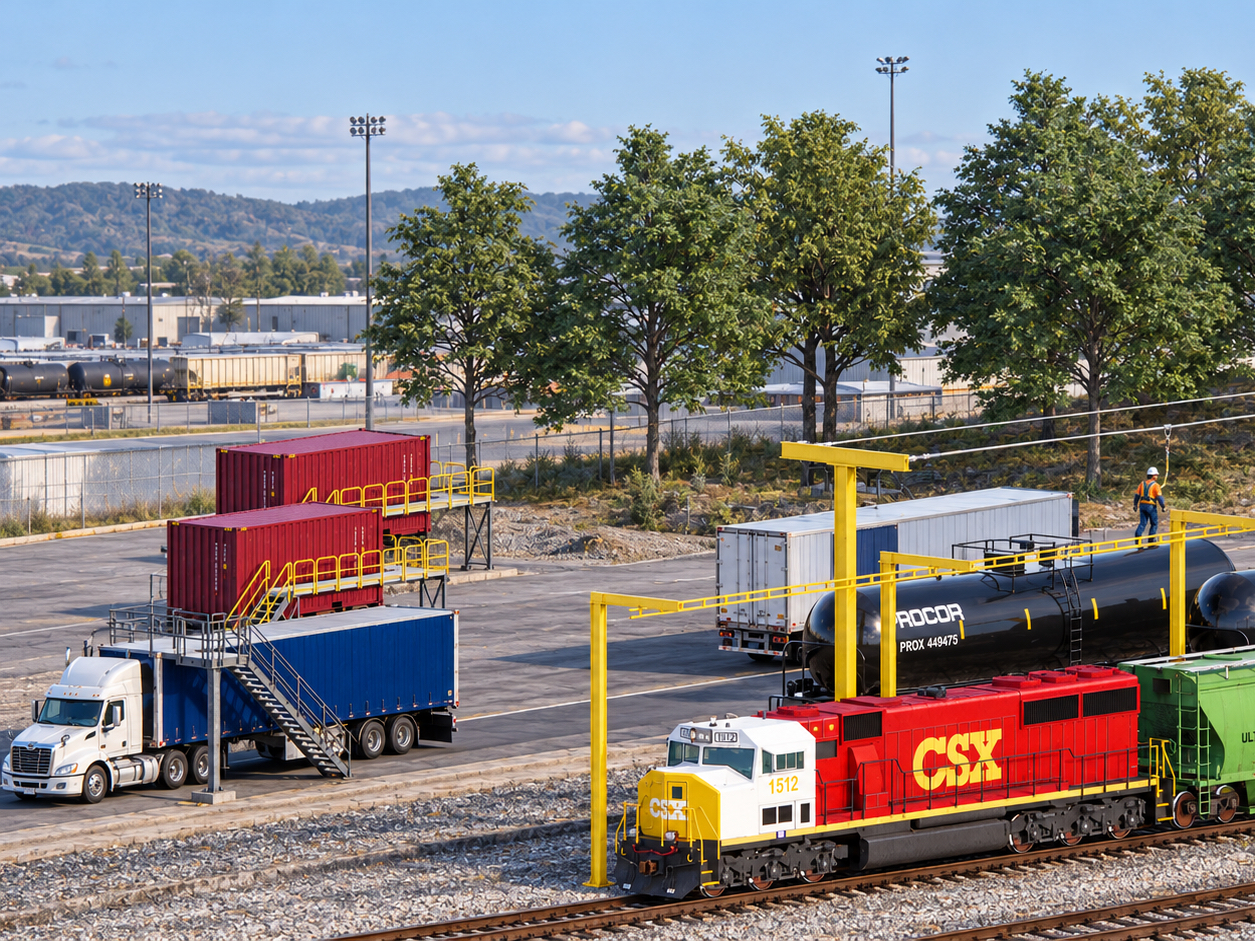
Workers open hatches and walk the car roof about 15 feet up. Overhead rigid track or a horizontal lifeline keeps them connected from one end of the car to the other.
Outdoor Track With No Structure
Most loading spots have no building or canopy to anchor to. An inverted L or T-frame sets in its own concrete foundation beside the track and reaches over the car.
Railcar Loading Platforms
Crews stage and run loading equipment at car-top height. A guarded platform with stairs and a self-closing gate gives them a safe place to stand.
Railcar Gangways
The gap between the platform and the car is where many falls start. A self-leveling gangway with a safety cage bridges it and encloses the worker at the hatch.
Car Ladders
Climbing the car ladder with tools in hand is a hazard of its own. Fixed stairs up to a loading platform replace the climb.
Car Shops and Canopies
Inside a car shop or under a loading canopy, the anchor can hang from existing steel. Ceiling-mounted rigid rail covers the full length of the car.
Rail Yard Safety Products
These are the fall protection systems for rail cars we install most often. Most yards use a mix, and working that out is what the site visit is for.

Freestanding Cantilever Rigid Rail
Continuous overhead protection along a full work line, on a counterweighted base with no building attachment.

Horizontal Lifeline System
Continuous tie-off across long spans, engineered to your structure, span, and simultaneous user count.

Free Standing Swing Arm
A rotating overhead anchor on a freestanding base — coverage across a work area with no building modification.

Ceiling Mounted Rigid Rail
Continuous overhead protection suspended from the building structure, with zero floor footprint.

Industrial Platform
A stable, guarded work surface for tank tops, hoppers, mixers, and machinery access.

Metal Stairs
Industrial stairways engineered to OSHA 1910.25 geometry, built to your rise and configuration.

Self-Closing Ladder Safety Gate
A spring-loaded gate at the top of a fixed ladder that closes behind the climber automatically.

Portable & Mobile Fall Arrest System
A rated overhead anchor on wheels — rolls to the work, sets up in minutes, no installation required.
Nationwide OSHA Compliant Fall Protection
Why Railroads and Rail Shippers Choose EDGE
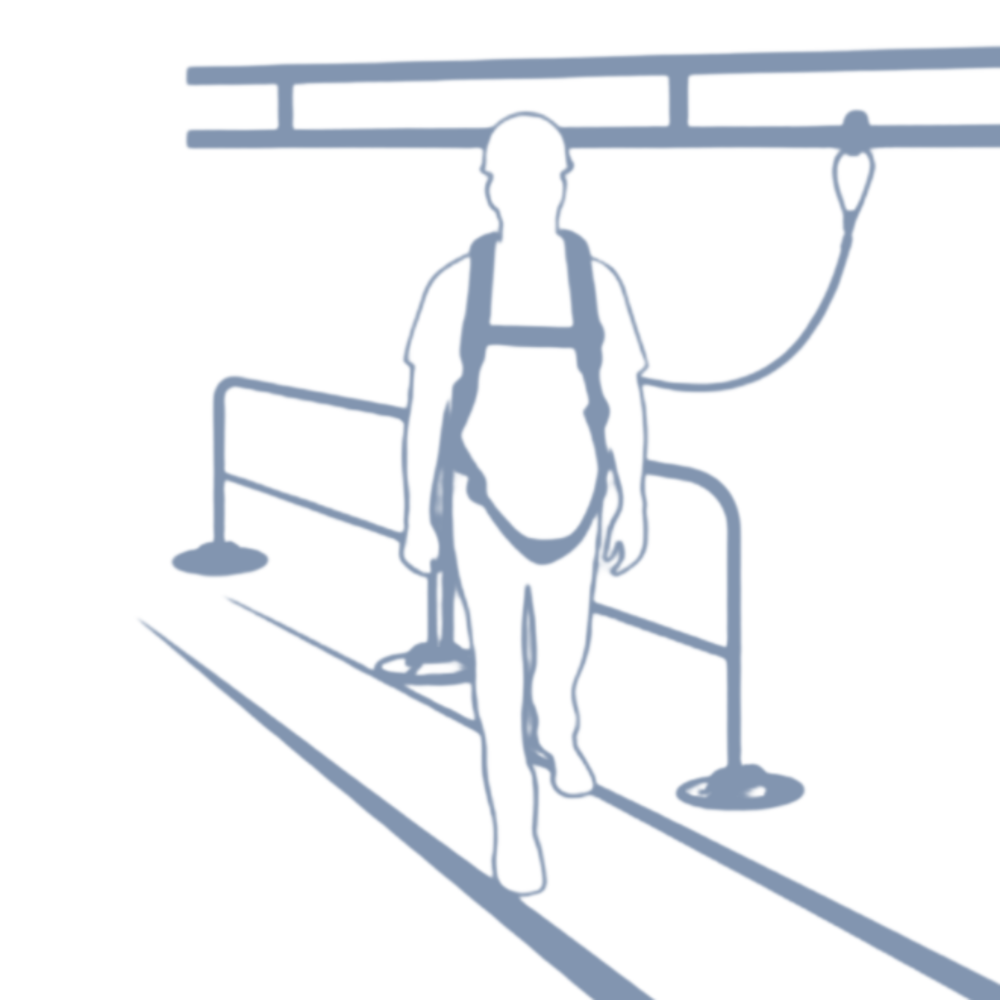
Railroads, shippers and loading terminals need one partner for the whole system, from the foundation to the annual inspection.
- Engineered for your track: car types, spot positions and how many people work on top at once
- Foundations included: EDGE sizes the foundations and arranges an earthwork analysis when the site needs one, and a licensed professional engineer stamps the drawings after your approval
- Proven on open track: for a railcar loading customer with no existing structure, EDGE installed a freestanding inverted L in concrete beside the track, with rigid track running over the cars
- Our own installation crews, working around your loading schedule and rail traffic, in all 50 states and Canada
- Free CAD layout of the proposed system on your track before you commit
- Ongoing support: annual inspections and five-year anchorage pull tests from our in-house team
Our Happy Clients
We are grateful for the wonderful testimonials from our happy and beloved clients. From local businesses owners to Fortune 500 executives. You all have helped make us a force in the workplace fall protection industry!
Railroad and Railcar Fall Protection FAQ
Rail yard managers, safety leads and terminal operators ask these questions first. Here are straight answers.
It depends on where the car is and which state the site is in. OSHA’s 1996 rolling stock memo says falls from rolling stock are not cited under the walking-working surfaces rules, and that the personal protective equipment standard applies only when the car is inside of or next to a structure where fall protection is feasible. In 2025 the Eighth Circuit held that the Federal Railroad Administration, not OSHA, covers work on top of railcars in seven states, and it denied rehearing in February 2026. EDGE Fall Protection designs railcar systems to OSHA and ANSI Z359 either way. This is general information, not legal advice.
Both are freestanding overhead structures set in their own foundations beside the track. An inverted L has one column on one side and an arm that reaches over the car, so it covers one track. A T-frame has a center column with arms reaching both ways, so one structure covers two parallel tracks. Either one carries rigid track or a cable horizontal lifeline. EDGE Fall Protection chooses between them based on track spacing and where foundations can go.
If workers load at a fixed spot, most sites need both. The platform gives workers a guarded place to stand at car-top height, and the gangway bridges the gap onto the car and adjusts to different car heights, with a safety cage that can enclose the worker at the hatch. Workers who move along the top of the car still need an overhead anchor. EDGE Fall Protection designs all three to fit the same car positions.
Yes. EDGE Fall Protection serves all 50 U.S. states and Canada with its in-house installation team. For federally regulated railways, section 12.07(1)(a) of the Canada Occupational Health and Safety Regulations requires a fall-protection system for work on a vehicle at 3 metres or more, while shippers and terminals follow provincial rules. EDGE designs Canadian systems to CSA Z259.