 Now Serving Canada
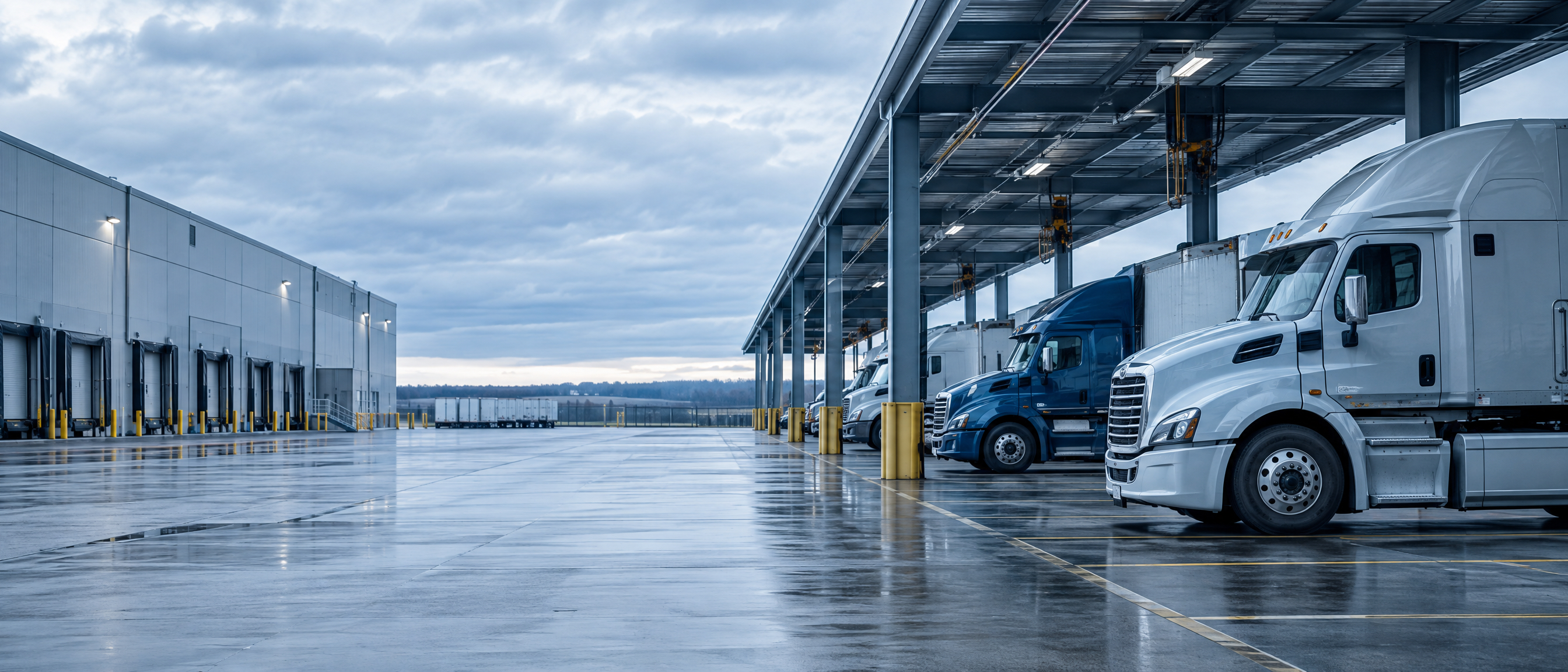
Transportation Fall Protection for Trucks and Trailers
Fall Protection for Trucks, Tankers and Trailers
Trucking, terminal and transit crews work on top of vehicles that were never built to be stood on: tank trucks with top hatches, flatbeds with loads to tarp and strap, hopper trailers and buses with equipment on the roof. Vehicles stop in slightly different places, most loading lanes are outdoors, and there is usually nothing on the vehicle to tie off to. At many sites the person on top is a driver from another company.
EDGE Fall Protection designs overhead lifelines and rigid rail, freestanding inverted L and T-frame systems, truck loading platforms, gangways and mobile anchors around your lanes, your vehicles and the way your crews work. We engineer the foundations, install with our own crews and inspect every system each year.
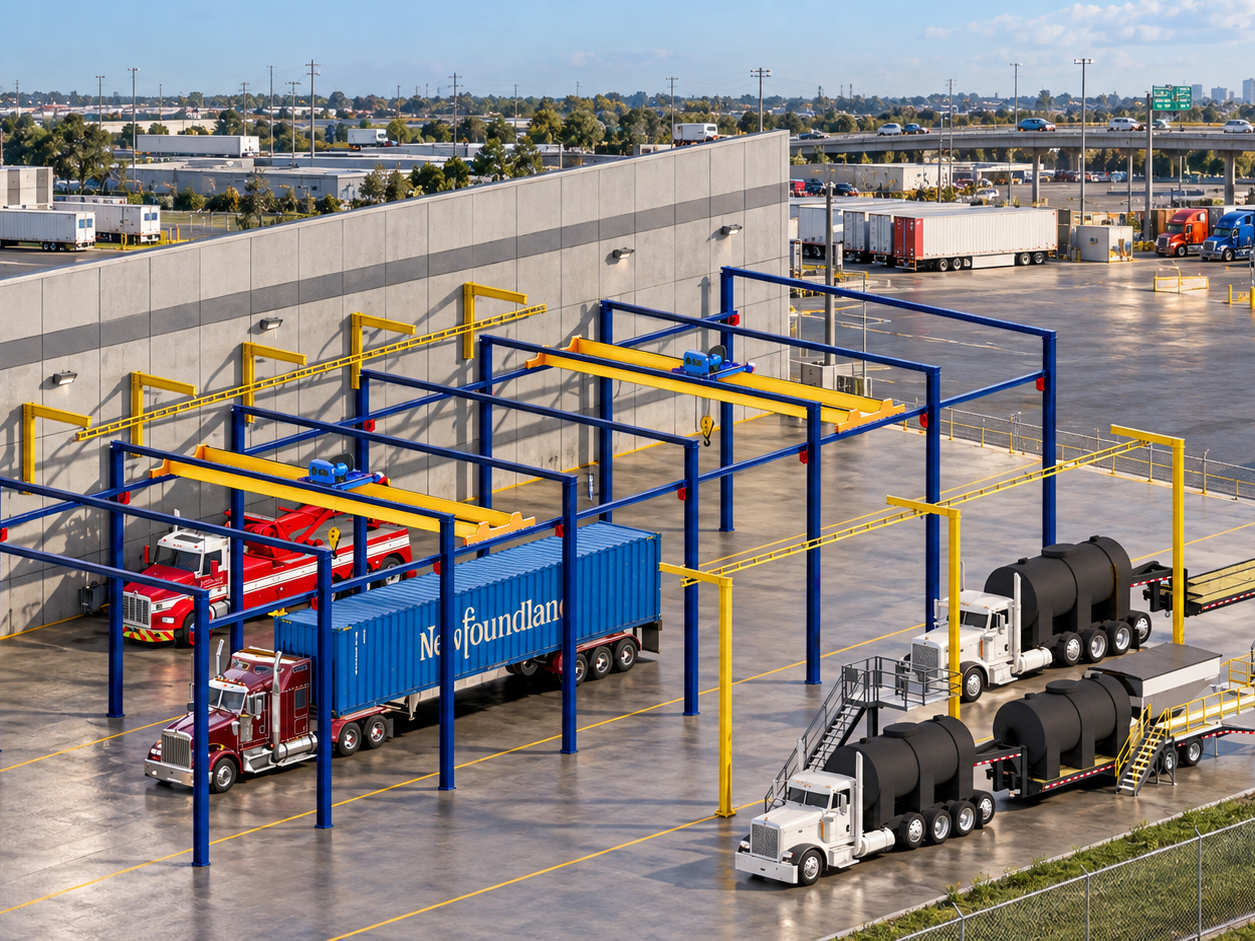
Fall Protection for Truck Drivers and Fleet Crews
Loading lanes, racks and maintenance bays share one problem: people working on top of vehicles. These are the hazards we are asked to solve most often.
Tank Truck and Trailer Tops
Drivers open tanker hatches from the top of the trailer, often in rain or ice. A freestanding inverted L or T-frame carries rigid track overhead so they stay connected the whole time.
Truck Loading Racks
Operators stage and run loading arms at truck-top height. A guarded truck loading platform with stairs and a self-closing gate gives them a safe place to stand.
Gangways and Safety Cages
The step from the platform onto the tank is where many falls start. A self-leveling gangway with a safety cage bridges the gap and encloses the worker at the hatch.
Flatbed Tarping and Strapping
Flatbed crews move end to end while they tarp, strap and unload. An overhead horizontal lifeline along the lane keeps them tied off the whole length of the trailer.
Bus and Fleet Maintenance Bays
Bus and truck roofs carry HVAC and equipment that mechanics service from the top. Ceiling-mounted rigid rail covers the full bay with no floor footprint.
Yards and Occasional Work
Not every vehicle can pull into a lane with a fixed system. A portable fall arrest unit rolls to the vehicle and raises a rated anchor overhead.
Vehicle Fall Arrest Systems and Truck Loading Platforms
These are the systems we install most often at truck terminals, loading racks and fleet shops. Loading railcars at the same site? See our railcar fall protection page.

Freestanding Cantilever Rigid Rail
Continuous overhead protection along a full work line, on a counterweighted base with no building attachment.

Horizontal Lifeline System
Continuous tie-off across long spans, engineered to your structure, span, and simultaneous user count.

Ceiling Mounted Rigid Rail
Continuous overhead protection suspended from the building structure, with zero floor footprint.

Free Standing Swing Arm
A rotating overhead anchor on a freestanding base — coverage across a work area with no building modification.

Column Fold Away
A column-mounted arm that folds flat against the column when not in use, using zero floor space.

Portable & Mobile Fall Arrest System
A rated overhead anchor on wheels — rolls to the work, sets up in minutes, no installation required.

Industrial Platform
A stable, guarded work surface for tank tops, hoppers, mixers, and machinery access.

Metal Stairs
Industrial stairways engineered to OSHA 1910.25 geometry, built to your rise and configuration.

Portable Stair Systems
Rolling stairs with locking casters — compliant access that moves to where the work is today.

Self-Closing Ladder Safety Gate
A spring-loaded gate at the top of a fixed ladder that closes behind the climber automatically.

Loading Dock Gate
Barrier protection for an open dock door, so the four-foot drop is guarded whenever a trailer is not in the bay.
Nationwide OSHA Compliant Fall Protection
Why Fleets, Terminals and Transit Teams Choose EDGE
Fleet, terminal and transit managers need fall protection that fits the vehicles they actually run and does not slow down loading or service.
- Coverage sized to your vehicles: lanes, stopping zones and how many people work on top at once
- Freestanding options set in their own foundations, for open lanes and sites where the building cannot carry the load
- Platforms in modular aluminum or galvanized steel, matched to the trucks you load
- Engineered and stamped: EDGE designs the foundations and loads, and a licensed professional engineer stamps the drawings after your approval
- Our own installation crews, scheduled around loading windows and shop shifts, in all 50 states and Canada
- Ongoing support: annual inspections and five-year anchorage pull tests from our in-house team
Our Happy Clients
We are grateful for the wonderful testimonials from our happy and beloved clients. From local businesses owners to Fortune 500 executives. You all have helped make us a force in the workplace fall protection industry!
Transportation Fall Protection FAQ
Fleet managers, terminal supervisors and EHS teams ask these questions before the first site visit. Here are straight answers.
OSHA has no general industry standard written specifically for the tops of trucks and trailers. Its 1996 rolling stock memo, which covers tank and hopper trucks and trailers, says falls from rolling stock are not cited under the walking-working surfaces rules, and that the personal protective equipment standard applies only when the vehicle is inside of or next to a structure where fall protection is feasible. The General Duty Clause can still apply. Loading platforms and docks are walking-working surfaces and need protection at 4 feet (29 CFR 1910.28(b)(1)(i)). This is general information, not legal advice.
With continuous overhead protection along the length of the trailer, because workers move from end to end while they tarp, strap and unload. EDGE Fall Protection installs overhead horizontal lifelines or rigid rail along the loading lane, mounted to a building or canopy, or carried on freestanding inverted L or T-frame structures outdoors. Where a permanent system is not practical, a portable fall arrest unit brings the anchor to the trailer.
If tank trucks are loaded at a fixed position, most sites need both. The platform gives workers a guarded place to stand at truck-top height, and the gangway bridges onto the vehicle and adjusts to different truck heights, with a safety cage that can enclose the worker at the hatch. Where two lanes run side by side, one double-sided platform can serve both. EDGE Fall Protection sizes them to the trucks you load.
With overhead fall arrest suspended from the building. EDGE Fall Protection installs ceiling-mounted rigid rail or horizontal lifelines above the bay, so a mechanic working on roof-mounted equipment stays connected while moving along the bus. EDGE first confirms the building structure can carry the system and calculates the fall clearance for the bay.