 Now Serving Canada
Oil and Gas Fall Protection for Energy and Utilities
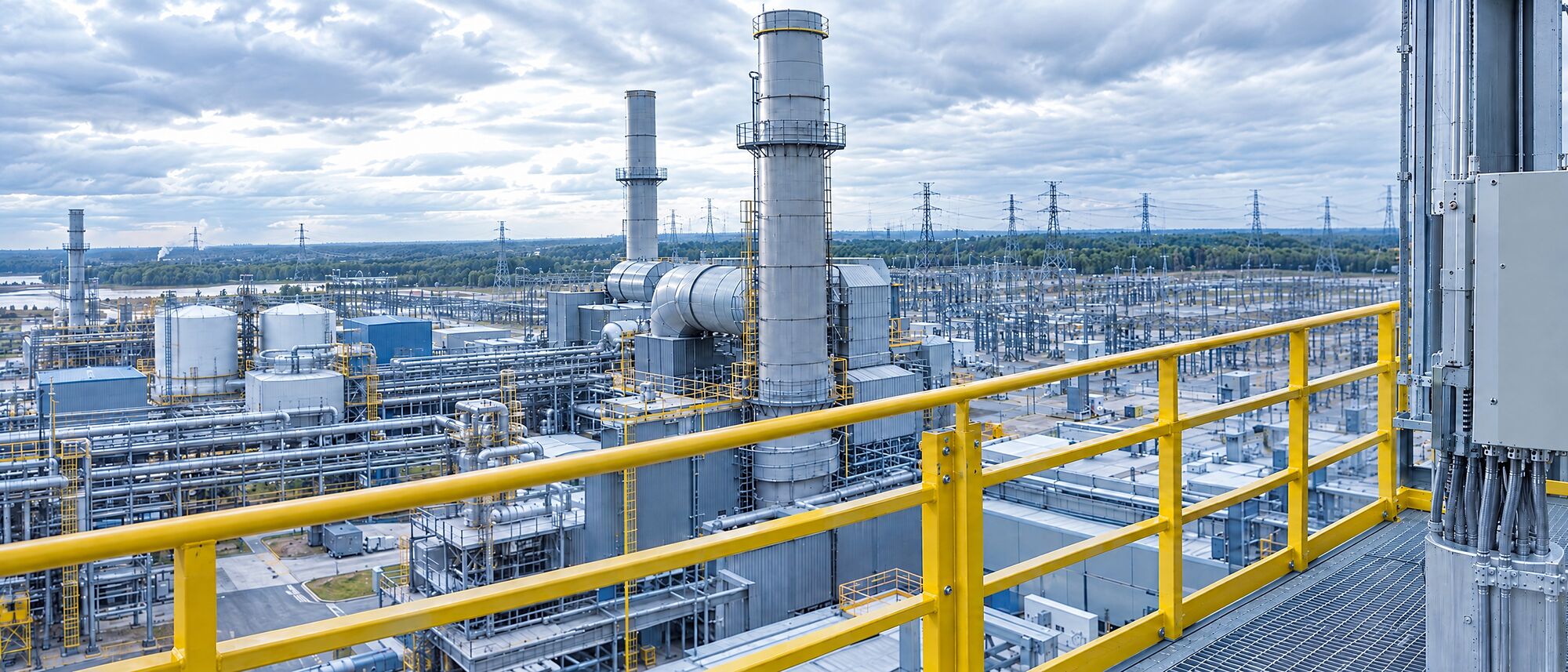
Oil and Gas Safety From the Refinery to the Substation
Oil and gas, refinery and utility work puts people at height in hard conditions: climbing tall fixed ladders to tanks and stacks, moving between platforms on process units, loading tank trucks and railcars at fuel terminals, and servicing equipment on rooftops and substations. Rain, ice, wind and oil or grease on walking surfaces make every one of those tasks riskier, and many sites are visited only a few times a year.
EDGE Fall Protection designs work platforms, modular and pit railing, ladder fall arrest, overhead and rooftop lifelines and mobile fall protection for those conditions, with galvanized and powder-coated finishes for outdoor exposure. We engineer to your structure, install with our own crews and inspect every system each year.
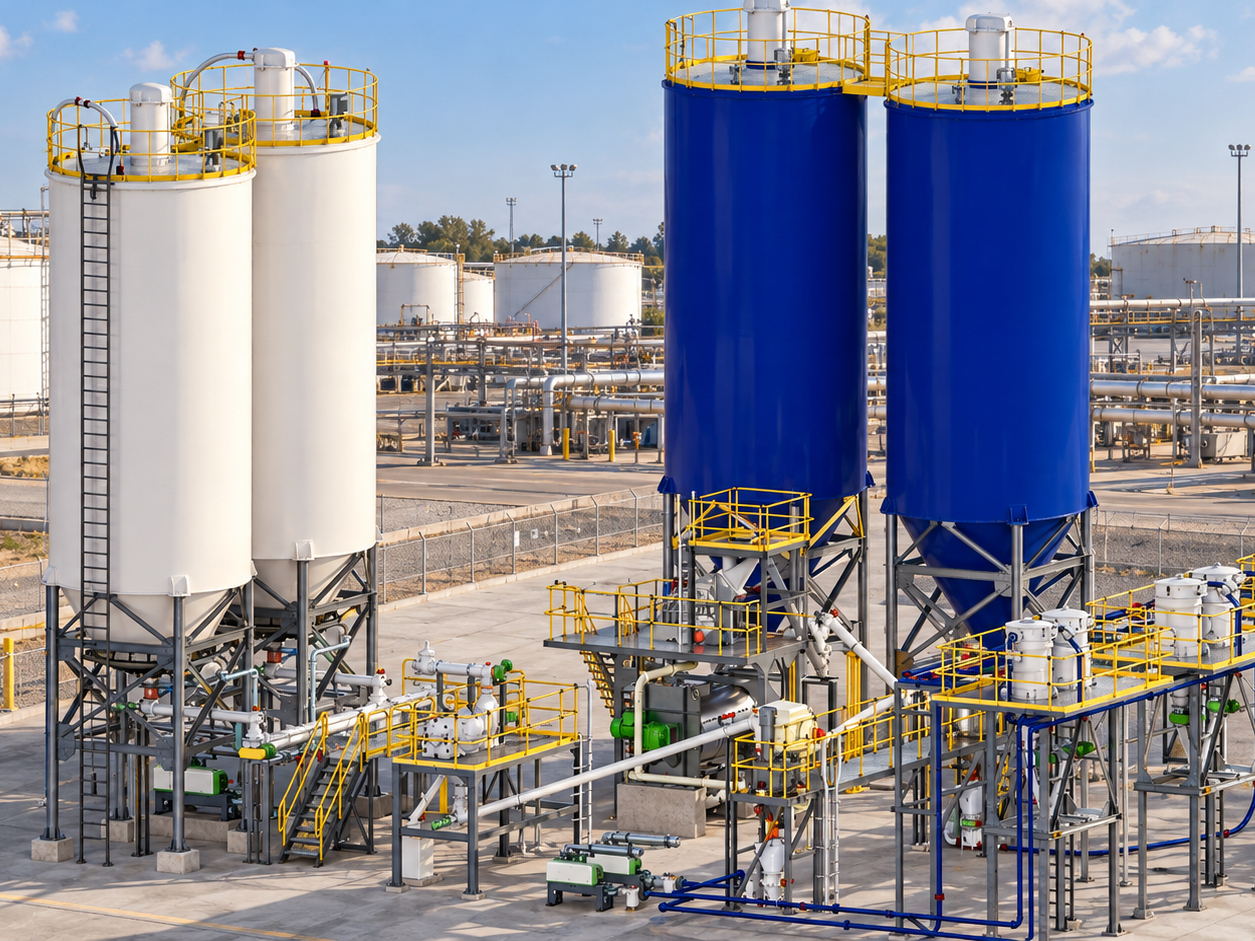
Refinery Fall Safety: Where Falls Happen at Energy Sites
Energy sites mix plant-floor hazards with outdoor ones. These are the spots oil and gas, refinery and utility teams call us to fix most often.
Tall Fixed Ladders
Fixed ladders to tanks, stacks and roofs are a long climb with nothing to catch a slip. A ladder fall arrest system adds a cable and sleeve that locks if the climber falls.
Process Units and Equipment Decks
Process units, turbine decks and boiler decks need routine service at height. Industrial platforms give crews guarded footing beside the equipment.
Tank Tops and Vessels
Tank tops and vessel hatches leave crews near an edge with nothing to hold. Custom guardrail is engineered to the shape you have.
Loading Racks and Fuel Terminals
At refineries and fuel terminals, workers load tank trucks and railcars from a rack. Freestanding overhead systems keep them tied off on top of the vehicle.
Pits, Trenches and Openings
Pits and equipment openings need guardrail that can come out for access. Removable pit railing drops into fixed brackets and lifts out when needed.
Weather, Corrosion and Rooftops
Control buildings carry HVAC units and solar arrays near the edge, and coastal and offshore-adjacent sites add saltwater corrosion. Non-penetrating guardrail in galvanized steel protects the roof edge.
Oil Refinery and Utility Fall Protection Systems
These are the oil and gas fall protection systems we specify most for refineries, plants, substations and energy sites. Tell us the asset, the access route and how often crews go up, and we’ll recommend the right fit.

Ladder Fall Arrest System
A cable or rail with a locking sleeve that satisfies the fixed ladder requirement a cage no longer meets.

Fixed Roof Access Ladder
Roof access ladders built to the rule as it reads today, including the ladder safety system requirement over 24 feet.

Self-Closing Ladder Safety Gate
A spring-loaded gate at the top of a fixed ladder that closes behind the climber automatically.

Industrial Platform
A stable, guarded work surface for tank tops, hoppers, mixers, and machinery access.

Metal Stairs
Industrial stairways engineered to OSHA 1910.25 geometry, built to your rise and configuration.

Industrial Crossover
A rated route over the pipe run or conveyor your people are currently climbing across.

Customized Guardrail Solutions
Guardrail engineered for the conditions you actually have when no catalog configuration will fit.

Industrial Removable Safety Railing
Rail sections that lift out by hand for equipment access and reset in minutes, rated the same as fixed rail when in place.

AccuFit Modular Railing System
A pipe-and-fitting system that handles corners, curves, and elevation changes without custom fabrication.

Horizontal Lifeline System
Continuous tie-off across long spans, engineered to your structure, span, and simultaneous user count.

Freestanding Cantilever Rigid Rail
Continuous overhead protection along a full work line, on a counterweighted base with no building attachment.

Portable & Mobile Fall Arrest System
A rated overhead anchor on wheels — rolls to the work, sets up in minutes, no installation required.

360° Mobile Safety Rail
Our most versatile freestanding guardrail — weighted bases, no penetrations, and fully relocatable as your rooftop changes.
Nationwide OSHA Compliant Fall Protection
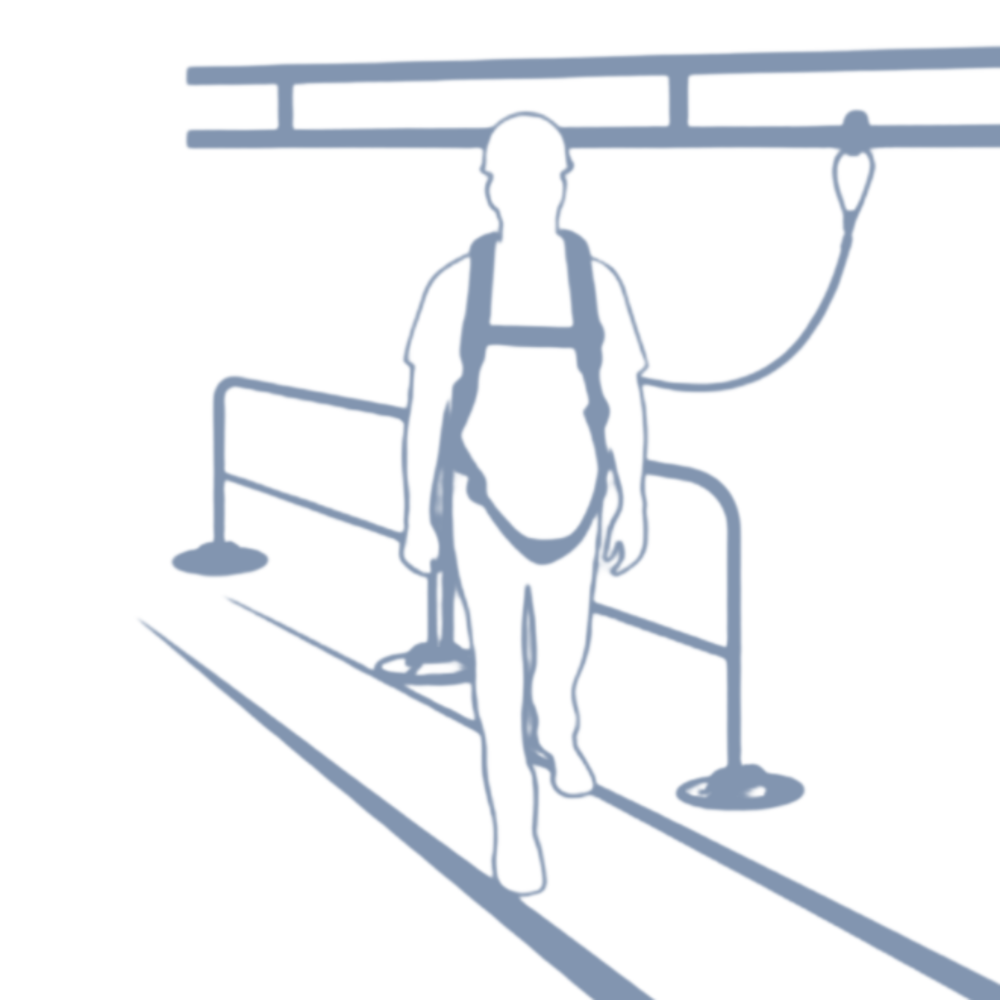
Why Oil, Gas and Utility Teams Choose EDGE
Energy sites need fall protection built for the outdoors and for crews who may only go up a few times a year.
- Finishes for the conditions: galvanized and powder-coated options for outdoor, corrosive and coastal sites
- Engineered and stamped: EDGE calculates the loads and designs foundations where needed, and a licensed professional engineer stamps the drawings after your approval
- Built around your safety program, including electric utility work that follows OSHA 29 CFR 1910.269
- Mobile options for sites and tasks where a permanent system does not make sense
- Our own installation crews, scheduled around outages and operations, in all 50 states and Canada
- Ongoing support: annual inspections and five-year anchorage pull tests from our in-house team
Our Happy Clients
We are grateful for the wonderful testimonials from our happy and beloved clients. From local businesses owners to Fortune 500 executives. You all have helped make us a force in the workplace fall protection industry!
Oil and Gas Fall Protection FAQ
Plant managers, refinery safety leads and utility EHS teams ask these questions first. Here are straight answers.
Most plant, refinery and terminal work falls under OSHA’s general industry rules, which require fall protection on walking-working surfaces 4 feet or more above a lower level (29 CFR 1910.28(b)(1)(i)). Electric power generation, transmission and distribution work follows 29 CFR 1910.269, including arc-tested fall arrest equipment where workers are exposed to flames or electric arcs (1910.269(g)(2)). Construction work follows 29 CFR 1926. EDGE Fall Protection designs each system to the rule that applies. This is general information, not legal advice.
Under OSHA’s current rule, fixed ladders more than 24 feet tall installed on or after November 19, 2018 need a personal fall arrest system or ladder safety system, and all such ladders need one by November 18, 2036 (29 CFR 1910.28(b)(9)). OSHA proposed in April 2026 to remove the 2036 deadline while keeping the requirement for new and replacement ladders. That proposal is not final, so the current rule still applies. EDGE Fall Protection installs ladder fall arrest systems and new fixed ladders.
Most loading racks combine a guarded platform at loading height, a gangway onto the tank truck or railcar, and an overhead anchor for work on top of the vehicle. OSHA lets the working side of a loading rack go without fall protection only when the employer can show it is not feasible, the work that makes it infeasible is in progress, access is limited to authorized employees and they are trained (29 CFR 1910.28(b)(1)(iii)). EDGE Fall Protection designs the platform and overhead system together.
Workers should check their equipment before each use, and EDGE Fall Protection recommends a documented inspection of the full system by a competent person at least once a year. Outdoor sites see weather and corrosion, so that schedule matters. EDGE also pull tests anchorages every five years and gives you a report for your safety records.