 Now Serving Canada
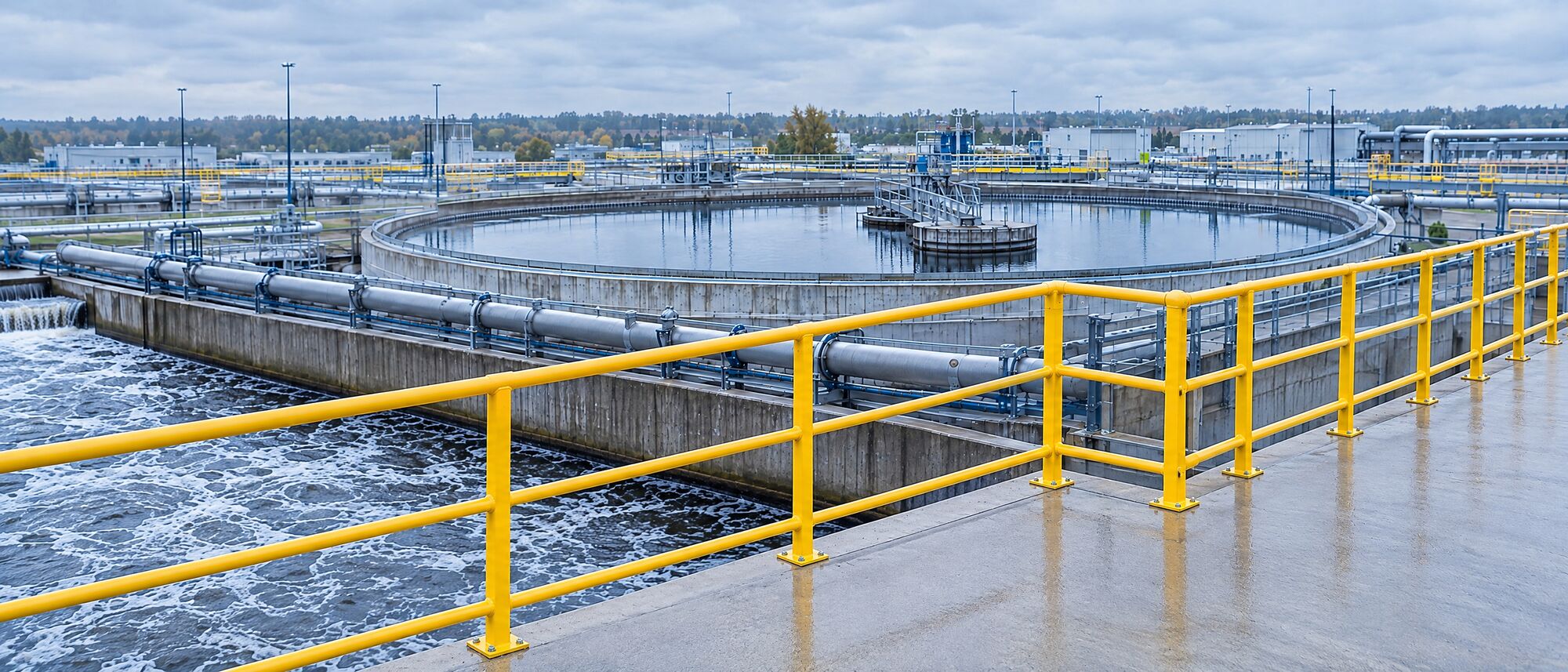
Water Treatment Plant Fall Protection
Wastewater Treatment Fall Protection for Aging Plants
Treatment plants put operators beside open water nearly every shift: clarifier walkways, aeration basins, open channels, wet wells and tank tops. Much of it is outdoors and constantly damp, and many plants still run platforms, ladders and rail installed decades ago that no longer match how the plant is used or what OSHA requires today.
EDGE Fall Protection upgrades that protection without rebuilding the plant: aluminum and galvanized guardrail, removable rail, safety gates, hatch protection and ladder safety systems fitted to the platforms and walkways you already have. We install with our own crews and inspect every system each year.
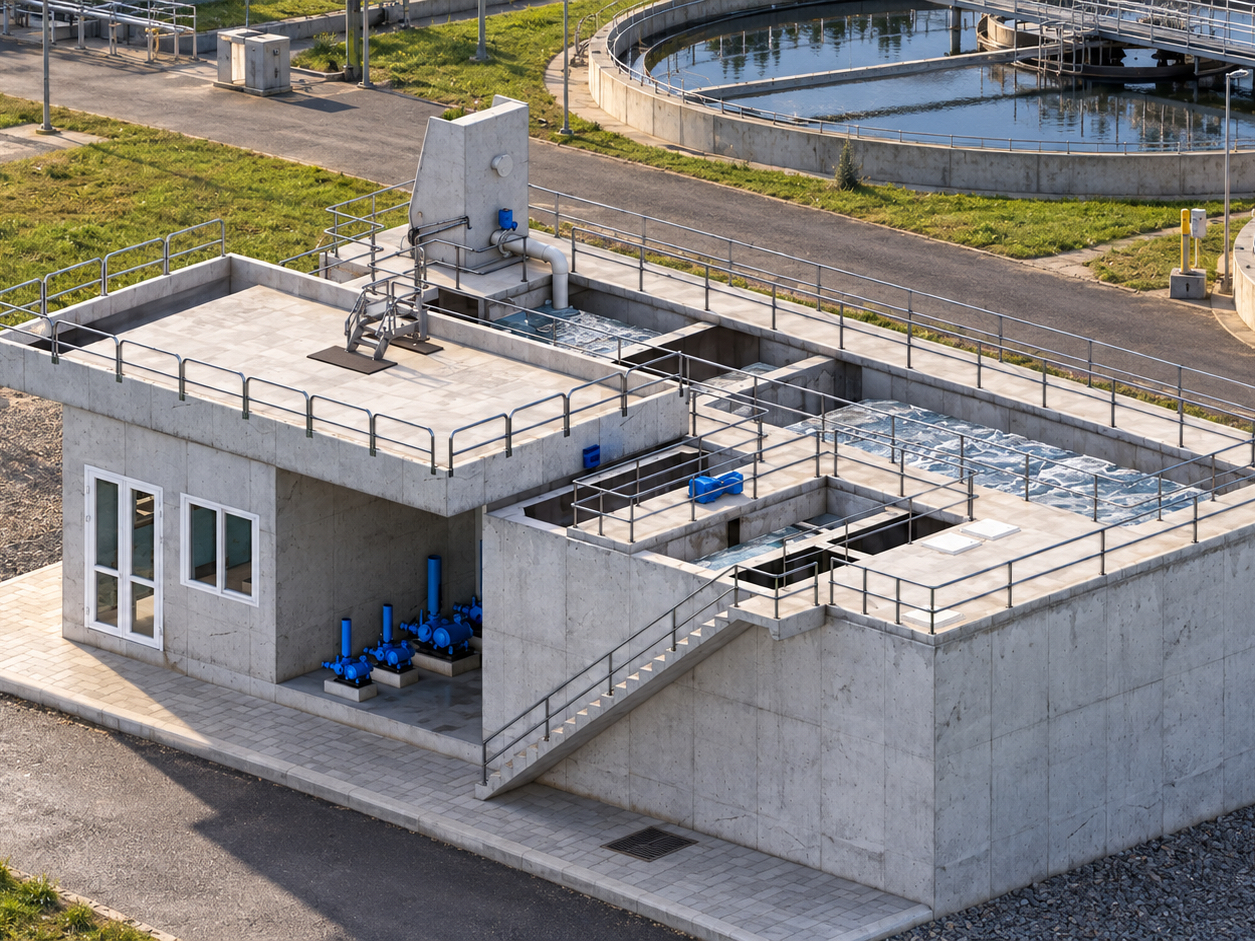
Clarifier and Tank Access: Where Falls Happen
Water and wastewater plants combine open edges, open water and constant moisture. These are the hazards operators and plant engineers bring to us most often.
Clarifiers and Basins
Walkways and bridges over clarifiers and basins need guarding along every open side. Removable safety railing lifts out when equipment has to come through.
Channels and Wet Wells
Open channels and wet wells are a fall into water. Guardrail floor- or face-mounted to the existing concrete follows the layout you have.
Treatment Building Roofs
Treatment building roofs carry fans, HVAC and odor control equipment near the edge. Non-penetrating guardrail protects the edge without drilling into the roof.
Hatches and Vaults
Access hatches to vaults and pump rooms leave an open hole every time they are lifted. Hatch guardrail with a self-closing gate guards the opening.
Tank and Digester Ladders
Tall fixed ladders to the top of a tank or digester are a long climb. A ladder fall arrest system retrofits onto most existing ladders.
Pipe Galleries and Crossings
Pipe galleries and filter rooms force workers over piping and valves. Industrial crossovers and metal stairs give them a guarded route.
Removable Safety Railing and Treatment Plant Systems
These are the systems we install most often at water and wastewater facilities. Send us plant drawings or photos of the areas in question, and we’ll recommend the right fit.

Industrial Removable Safety Railing
Rail sections that lift out by hand for equipment access and reset in minutes, rated the same as fixed rail when in place.

AccuFit Modular Railing System
A pipe-and-fitting system that handles corners, curves, and elevation changes without custom fabrication.

Customized Guardrail Solutions
Guardrail engineered for the conditions you actually have when no catalog configuration will fit.

Self-Closing Ladder Safety Gate
A spring-loaded gate at the top of a fixed ladder that closes behind the climber automatically.

Roof Hatch Guardrail
Fixed railing and a self-closing gate around a roof hatch, protecting the opening a worker steps out of.

360° Mobile Safety Rail
Our most versatile freestanding guardrail — weighted bases, no penetrations, and fully relocatable as your rooftop changes.

360° Mobile Hide-a-Rail Folding Rail
Guardrail that folds down flat when the roof is empty and locks upright in seconds when crews go up.

Ladder Fall Arrest System
A cable or rail with a locking sleeve that satisfies the fixed ladder requirement a cage no longer meets.

Fixed Roof Access Ladder
Roof access ladders built to the rule as it reads today, including the ladder safety system requirement over 24 feet.

Industrial Crossover
A rated route over the pipe run or conveyor your people are currently climbing across.

Metal Stairs
Industrial stairways engineered to OSHA 1910.25 geometry, built to your rise and configuration.

Davit Arm System
A rotating boom providing an overhead anchor beyond an edge or opening, for suspended access and confined space rescue.
Nationwide OSHA Compliant Fall Protection
Why Water Utilities and Treatment Plants Choose EDGE
Plant operators and water utility engineers need protection that holds up in wet, corrosive conditions and fits structures that are already there.
- Experience across many treatment plants, much of it guardrail on treatment building roofs
- Aluminum or galvanized guardrail, floor- or face-mounted, with gates built in where people pass through
- Retrofit, not rebuild: systems fitted to existing platforms and walkways with minimal disruption to operations
- Engineered and stamped: EDGE calculates the loads, and a licensed professional engineer stamps the drawings after your approval
- Our own installation crews, working around plant operations, in all 50 states and Canada
- Ongoing support: annual inspections and five-year anchorage pull tests from our in-house team
Our Happy Clients
We are grateful for the wonderful testimonials from our happy and beloved clients. From local businesses owners to Fortune 500 executives. You all have helped make us a force in the workplace fall protection industry!
Water Treatment Fall Protection FAQ
Plant managers, operators and water utility engineers ask these questions first. Here are straight answers.
OSHA’s general industry rules require fall protection on walking-working surfaces 4 feet or more above a lower level (29 CFR 1910.28(b)(1)(i)). Workers above dangerous equipment, which OSHA defines to include vats and tanks, must be protected at any height (1910.28(b)(6)), and holes such as open hatches must be guarded (1910.28(b)(3)). EDGE Fall Protection designs treatment plant guardrail, gates and ladder systems to these rules and to the criteria in 29 CFR 1910.29. This is general information, not legal advice.
Under OSHA’s current rule, fixed ladders more than 24 feet tall installed on or after November 19, 2018 need a personal fall arrest system or ladder safety system, and all such ladders need one by November 18, 2036 (29 CFR 1910.28(b)(9)). OSHA proposed in April 2026 to remove the 2036 deadline while keeping the requirement for new and replacement ladders. That proposal is not final, so the current rule still applies. EDGE Fall Protection retrofits ladder fall arrest onto existing ladders and installs new ones.
Yes. Removable rail sections drop into fixed brackets and lock with a pin or set screw, so they can come out when equipment has to be serviced or replaced. While a section is out, the opening has to be protected another way until it goes back in. EDGE Fall Protection lays out the brackets so the sections that need to come out are the ones that can.
Only if it is rated for people in that exact configuration. Most davits EDGE Fall Protection installs at treatment plants lift pumps and equipment. Confined space entry and retrieval needs a davit, base and retrieval device rated for personnel, and OSHA requires a mechanical retrieval device for vertical permit spaces more than 5 feet deep (29 CFR 1910.146(k)(3)(ii)).