 Now Serving Canada
OSHA Lightning Standards: Keeping Workers Safe During Storms
Lightning is a serious safety threat on construction sites, especially for crews working at elevations. When a storm rolls in, it’s not enough to simply wait it out. OSHA lightning standards make it clear: employers have a duty to protect workers from lightning-related hazards. Let’s break down the key requirements, best practices, and actionable lightning safety tips for workers that align with OSHA standards.
What are OSHA Lightning Standards?
While OSHA does not have a standalone lightning safety regulation, it enforces requirements through the General Duty Clause. It mandates that employers provide a workplace “free from recognized hazards,” which includes the risk of lightning strikes during outdoor work.
In addition, OSHA specifies that all scaffold, crane, and demolition operations must pause during thunderstorms and electrical storms.
These OSHA lightning standards are legally enforceable, and noncompliance can lead to citations or penalties. OSHA’s lightning safety guidance provides detailed recommendations for employers.
Lightning Safety Tips for Workers
To align with OSHA lightning standards and keep your crew protected, you should take these key actions:
- Monitor Weather Continuously: Use a weather radio, apps, or lightning detection services to track storm activity.
- Provide Safe Shelter: Workers should be directed to fully enclosed buildings with plumbing and wiring, or metal-topped vehicles with rolled-up windows. Remain in the shelter for at least 30 minutes after the last clap of thunder.
- Avoid Elevated and Conductive Surfaces: Stop work on roofs, scaffolding, ladders, and near cranes or power lines. Stay away from metal tools and piping. This rule supersedes other rooftop safety requirements, such as safety railings.
- Train Every Crew: Educate your team on how to identify lightning threats, evacuate efficiently, and locate safe shelter quickly as part of your lightning safety plan.
Recognizing Storm Hazards for OSHA Lightning Safety
Recognizing early signs of a storm is critical to preventing exposure. Look out for:
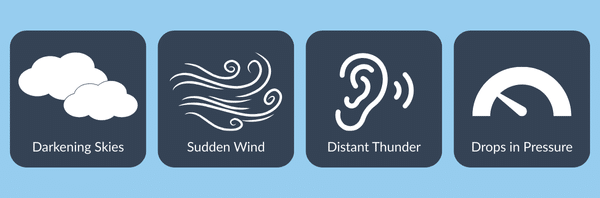
If any of these indicators appear, begin monitoring local weather reports closely and be prepared to suspend outdoor work.
What are the OSHA Lightning Distance Standards?
Lightning is unpredictable, and it can strike up to 10 miles outside of any rainfall. As the experts at OSHA and NOAA’s lightning safety program say: “When thunder roars, go indoors!” If you hear even distant thunder, stop operations and get all workers to a safe place immediately. Thunder is always caused by lightning, and nowhere outside is safe when thunderstorms are in your area.
OSHA Lightning Standards for Cranes
Due to their height and conductivity, cranes are particularly vulnerable to lightning strikes. Under the OSHA crane lightning policy, you must immediately stop crane operations when electrical storms are present or approaching. Work may only resume after a qualified person determines conditions are safe. Cranes should never be used to hoist loads or conduct operations during a thunderstorm, and operators must be trained on evacuation and shelter protocols specific to crane use.
Creating an Effective Lightning Safety Plan
A site-specific lightning safety plan is a critical part of your emergency action plan. It should include:
- Procedures for suspending and resuming outdoor work
- Communication protocols to alert workers
- Designated shelter locations
- Evacuation timelines
- Responsibilities for supervisors and safety leads
This lightning safety plan should be reviewed during site orientations and reinforced regularly.
OSHA Lightning Standards FAQs
What are OSHA requirements for lightning protection?
Employers must eliminate recognized lightning hazards under the General Duty Clause and maintain a lightning safety plan that suspends high-risk work during storms.
How far should lightning be to stop work?
If you can hear thunder, pause outdoor work immediately. This helps satisfy OSHA lightning distance standards.
What type of shelter is safest for workers?
Fully enclosed structures with plumbing and wiring, or hard-topped vehicles, are the safest options. Read the NOAA lightning guidelines for more details on shelters for large and small groups.
Do workers need to be trained on lightning safety?
Yes, OSHA expects all outdoor crews to be trained on lightning safety procedures specific to their jobsite.
Don’t Let Lightning Catch You Off Guard
Storms can develop quickly, and a lack of preparation can lead to tragic outcomes. EDGE Fall Protection can help your team comply with OSHA lightning standards to create a safer jobsite with equipment solutions and expert support.
Need help keeping workers safe in other severe weather situations?
Learn more in our OSHA Hurricane Preparedness Plan for Worker Safety to keep your crews protected during severe weather events, from lightning to hurricanes and beyond. We also write about heat safety and tornado worker safety.
Contact us today to protect your workers from weather, falls, and other work safety conditions.