 Now Serving Canada
Skylight Fall Protection

Skyguard Skylight Screen
Our premium curb-mounted skylight screen — rated to arrest a falling worker with almost no loss of daylight.

Skyview Barrier Rail System
Guardrail that rings the skylight and keeps workers off it entirely — the answer for clustered or oversized openings.

Skylight Screen
The practical, cost-effective screen for protecting a standard skylight opening across a whole roof.

Metal Roof Skylight Screen
Skylight protection engineered for the panel profile, because a metal roof has no conventional curb to fasten to.
Screen or Barrier Rail?
Both satisfy OSHA. Which one fits depends on the skylight and on who goes near it.
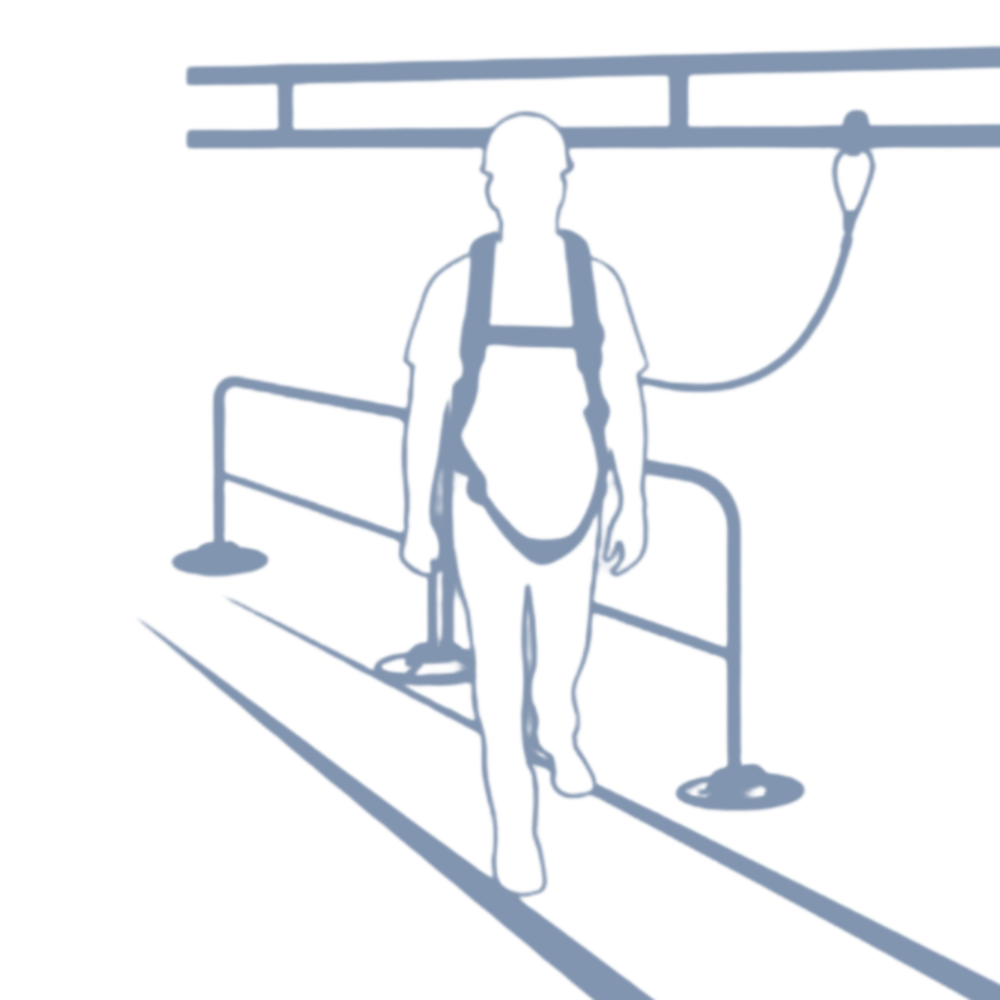
- Screens mount directly to the curb and cover the opening itself. They are the compact choice, they do not intrude on the surrounding roof, and they keep working even if someone walks straight onto them.
- Barrier rails ring the skylight with guardrail and keep workers away from the dome entirely. They suit clustered skylights, unusually large openings, and curbs not strong enough to carry a screen.
On standing seam and R-panel roofs we use a profile-specific screen that clamps to the seam. If you have a mix of skylight types across a portfolio, our site assessment inventories every opening and standardizes the fix.
Skylight Protection FAQ
Straight answers on what OSHA requires for skylights and how to protect them without damaging the roof.
Yes. OSHA treats a skylight as a hole in a walking-working surface, and 29 CFR 1910.28(b)(3) requires each employee exposed to a hole four feet or more above a lower level to be protected by a cover, a guardrail system, a travel restraint system, or a personal fall arrest system. A skylight dome by itself does not qualify as a cover.
No, and this assumption causes real injuries. Skylight glazing is engineered for weather and light transmission, not for arresting a falling worker. Acrylic and polycarbonate become brittle with years of UV exposure, so a dome that once held weight may shatter under a fraction of it. Even domes marketed as load rated degrade, which is why OSHA expects a separate screen, cover, or rail.
Barely. Screens are an open steel grid, so the great majority of daylight passes through and the interior light level is essentially unchanged. Facilities that installed skylights specifically for daylighting rarely notice a difference. If the space is light-critical, a barrier rail keeps the opening completely clear while still meeting the standard.
Not the roof membrane. Screens fasten to the skylight curb, which is a structural frame already built into the opening, so the field of the roof is untouched. Where a curb cannot carry the load, we use a non-penetrating barrier rail with weighted bases instead. Either way the membrane and its warranty stay intact.
Not for the skylights. Perimeter guardrail addresses the edge; a skylight is a separate hazard in the middle of the walking surface and needs its own protection. This is one of the most common gaps we find during inspections, because a roof can look fully compliant from the parapet while a dozen unguarded openings sit in the field of the roof.